
Groomsmen Style Guide for Kenyan Weddings (Suits, Accessories, Budget)
How to dress your groomsmen for a Kenyan wedding — from classic suits to cultural attire, with real prices, Nairobi shops, and practical coordination tips.
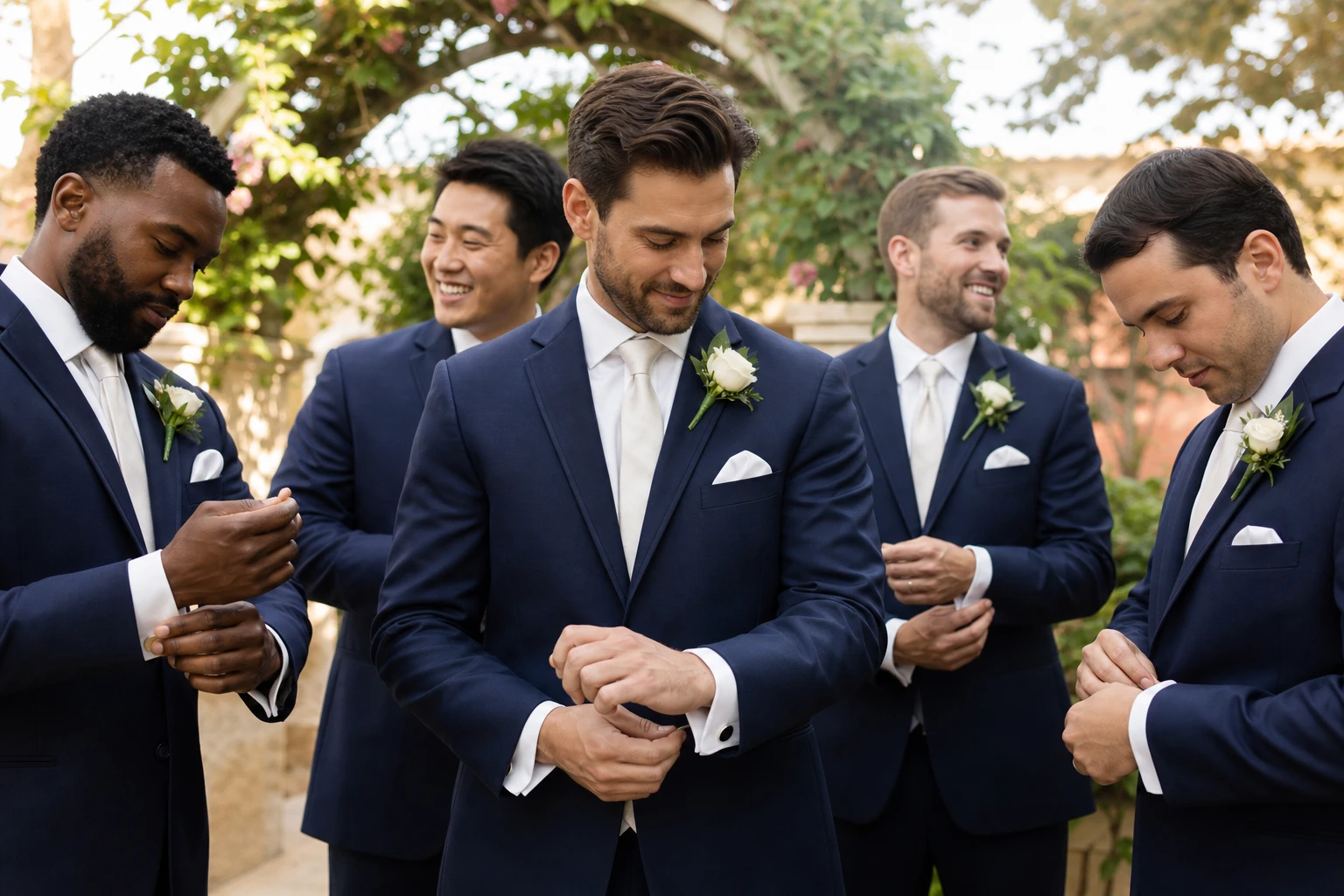
Getting five or six grown men to look coordinated on a wedding day is more complicated than it sounds. Sizes vary, budgets vary, opinions on what looks good vary even more. Add the Kenyan wedding context — where some guests will be in suits, others in cultural attire, and the wedding may span a church service and an outdoor reception — and you have a genuine styling challenge.
This guide is practical. Real suit options, real price ranges available in Nairobi, and real coordination strategies that actually work in the Kenyan context.
Start with the Groom
The groomsmen's attire should be coordinated with the groom, not decided independently. Before anything else:
- What is the groom wearing?
- What is the wedding's colour palette and overall aesthetic?
- What is the formality level — black tie, lounge suit, smart casual, or cultural attire?
The groomsmen should complement the groom without competing with him. A common approach is to have the groom in a slightly elevated version of what the groomsmen wear — a different tie or pocket square colour, a different cut, or an additional accessory that distinguishes him from the party.
The Main Style Options in Kenya
Classic Western suits: The most common choice for Nairobi weddings. Navy, charcoal, light grey, and black are the standard suit colours. Navy in particular photographs extremely well and works across skin tones.
African print (kitenge) elements: Many Kenyan grooms incorporate kitenge as pocket squares, bow ties, cummerbunds, or sash elements. This adds cultural colour and distinctiveness without requiring full traditional attire. Kenyan tailors who specialise in men's formal wear can incorporate these elements beautifully.
Full traditional attire: Depending on community — a Maasai shuka, a kanzu and suit jacket combination, or a culturally specific garment. These choices tend to make the most memorable visual statement and are increasingly celebrated at Kenyan weddings. If you go this route, ensure all groomsmen understand what is expected and where to source it.
Smart casual: For outdoor or garden weddings with a relaxed aesthetic, some couples opt for chinos, open-collar shirts, and a consistent colour palette rather than full suits. This works well aesthetically when the venue and tone support it.
Colour Coordination Approaches
Matching suits, different accessories: All groomsmen in the same navy or charcoal suit, with accessories that allow some individual variation. This is the most classic and easiest to coordinate.
Matching colour, different shades: All groomsmen in the blue family, for example — some in navy, some in mid-blue — creates visual unity with slight variety. Works better than it sounds when done intentionally.
Matching accessories, different suits: Groomsmen wear their own suits in a coordinated colour family (dark tones), with a matching tie or pocket square that unifies the look. The most budget-friendly option, as it allows each man to wear a suit he already owns.
Matching everything: Full uniformity in suit, shirt, tie, and shoes. Visually striking but requires more coordination and more cost for groomsmen who do not already own the required items.
Where to Source Suits in Nairobi
Tailors for made-to-measure:
Made-to-measure suits in Nairobi typically cost between Ksh 12,000 and Ksh 35,000 depending on the tailor and the fabric. This gives you the best fit and allows you to specify the exact colour and cut. Good tailors in Nairobi are found in the CBD (River Road area has many fabric and tailoring options), Westlands, and Ngong Road. Book at least six to eight weeks before the wedding to allow for fittings and adjustments.
Off-the-rack suit retailers:
- Mr Price and related chain stores carry basic suit options in the Ksh 8,000–15,000 range. Quality is serviceable for a one-day event.
- Woolworths South Africa (available at Junction and other malls) offers better quality suits in the Ksh 20,000–40,000 range.
- Several Nairobi boutiques in Westlands and Karen carry imported suits. Price and quality vary significantly — request a try-on and check the finish.
Suit hire:
For groomsmen who will not wear the suit again, hire is a practical option. Several Nairobi wedding suit hire services offer a full suit, shirt, tie, and pocket square package for Ksh 3,000–8,000 per groomsman per day. Confirm the hire company's fitting process and what happens if an item is damaged.
Shoes
Specify the shoe requirement clearly. If you leave it open, you will have groomsmen arriving in brown oxfords, black sneakers, and one pair of loafers. The minimum specification should be: colour (black or dark brown) and style (leather, closed-toe, no trainers). Budget: Ksh 4,000–15,000 depending on quality and source.
Many men can use a pair of formal shoes they already own. If the wedding is outdoors on grass or uneven ground, closed-toe leather shoes rather than suede are significantly more practical.
Accessories: Ties, Pocket Squares, Cufflinks
Ties: Standard silk or woven ties from Nairobi accessories shops run Ksh 800–2,500. If you want matching ties for all groomsmen, it is usually easiest for the groom or best man to purchase them centrally and distribute — this ensures actual matching rather than "similar enough."
Pocket squares: Folded silk or linen pocket squares run Ksh 500–1,500 each. Kitenge pocket squares are available at craft markets (Ngong Road, Maasai Market) and from some tailors. These are a relatively low-cost way to add a Kenya-specific visual element.
Cufflinks: Optional but visually polished. Cufflinks require shirts with French cuffs, so check before including them in your specifications. Simple silver or gold cufflinks run Ksh 800–3,000.
Coordination: How to Actually Make This Work
The best man is typically responsible for coordinating groomsmen attire logistics. Key steps:
Set a specification document: Write down exactly what each groomsman needs to wear, including: suit colour and cut, shirt (colour, collar style), tie or bow tie (colour, type), shoes (colour, style), socks, and any accessories. Share this clearly and early.
Set a deadline: Two months before the wedding, every groomsman should have confirmed their attire is sorted. This gives time for adjustments, exchanges, or hire bookings.
Organise a group fitting or check-in: If using a tailor for made-to-measure, coordinate fittings. If using off-the-rack or hire, organise a Saturday morning where the group goes together — this surfaces problems (a suit that does not fit, an item not available in someone's size) while there is still time to fix them.
Centralise purchases where possible: Ties, pocket squares, and accessories are easiest when purchased together by one person rather than independently by six. Colours will actually match.
For a broader picture of the best man's coordination duties, see the best man duties guide for Kenyan weddings.
Budget per Groomsman: Realistic Ranges
Here is what a groomsman should realistically budget across different scenarios:
Scenario 1 — Made-to-measure suit, purchased: Suit: Ksh 15,000–35,000 | Shirt: Ksh 2,000–5,000 | Tie: Ksh 800–2,500 | Shoes (if new): Ksh 5,000–12,000 | Total: Ksh 23,000–55,000
Scenario 2 — Off-the-rack suit, purchased: Suit: Ksh 12,000–25,000 | Shirt: Ksh 1,500–4,000 | Tie: Ksh 800–2,500 | Shoes (if new): Ksh 4,000–12,000 | Total: Ksh 18,000–43,000
Scenario 3 — Suit hire, own shoes: Hire package: Ksh 3,500–8,000 | Own shoes and accessories | Total: Ksh 4,000–10,000
Scenario 4 — Own suit, coordinated accessories only: Tie and pocket square: Ksh 1,000–3,500 | Accessories: Ksh 0–3,000 | Total: Ksh 1,000–6,500
Be transparent with groomsmen about what the commitment will cost before they agree to the role. Discovering a Ksh 25,000 suit expectation after accepting the invitation creates friction. For more on managing bridal party expectations, see how to pick your bridal party without drama.
A Note on Cultural Formality
At many Kenyan weddings, the aesthetic is layered — some family elders in traditional dress, some guests in Western formal wear, some in church-appropriate outfits. The groomsmen do not need to out-formalize the room or under-formalize it. A well-fitted navy or charcoal suit with clean accessories is appropriate for virtually every Kenyan wedding setting.
If the couple's wedding has a specific cultural emphasis — a Luo traditional ceremony, a Kikuyu church wedding in a specific community — the attire choice should reflect and respect that context. When in doubt, ask the families what feels right.
For colour palette inspiration that coordinates with bridesmaids and the overall wedding aesthetic, see wedding colour palettes in Kenya and bridesmaid dresses in Kenya.
Show Off Your Wedding Party
Create a wedding website that introduces your groomsmen and bridesmaids to your guests — with photos, roles, and the stories that matter. Harusi Hub makes it simple.
Build Your Wedding Website