
How to Plan an Interfaith Wedding in Kenya (Christian + Muslim Guide)
Planning a Christian-Muslim wedding in Kenya? Here's how to navigate the legal path, ceremony choices, and family expectations with respect for both faiths.
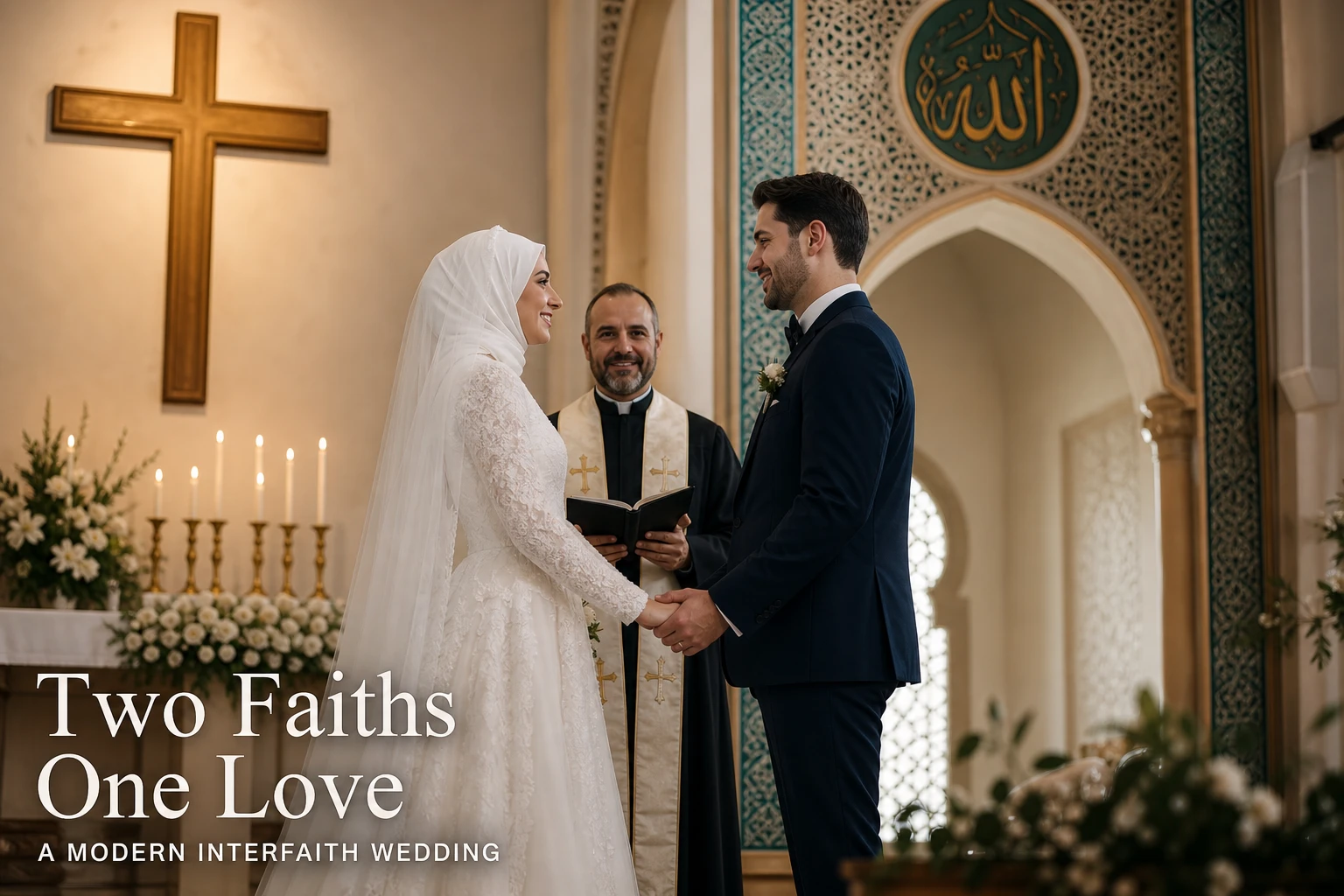
You love each other deeply. You also come from different faiths. And now you're trying to figure out how to build a wedding that honors both — without leaving anyone out.
Planning a Christian-Muslim wedding in Kenya is one of the most layered challenges a couple can face. It isn't simply a matter of combining two ceremonies. It involves legal considerations, theological boundaries, family expectations, and the deep question of what faith means to each of you individually. Couples who navigate it well do so not by glossing over the differences, but by addressing them honestly and early.
This guide walks you through the practical realities — what the law says, what your ceremony options look like, and how to hold space for both families.
What Kenya's Marriage Act Says
Kenya's Marriage Act 2014 recognizes five types of marriage: civil, Christian, customary, Islamic, and Hindu. Each carries its own legal requirements.
For interfaith couples, the important thing to understand is this: an Islamic marriage under the Marriage Act requires that both parties profess the Islamic faith, or that the non-Muslim partner converts. Similarly, a Hindu marriage requires a Hindu faith profession from both parties. A Christian marriage is solemnized in a church and typically requires at least one partner to be Christian.
This means that for a Christian-Muslim couple, the most legally straightforward path is a civil marriage registered at the Registrar of Marriages. A civil marriage has no religious requirements — it is a legal contract between two consenting adults. Once registered, you are legally married under Kenyan law regardless of any religious ceremonies you choose to hold.
Many interfaith couples choose civil registration first, then hold separate religious ceremonies — a nikah with the Muslim family and a church blessing with the Christian family — as celebrations of faith rather than legal registrations. This approach lets each ceremony breathe without the legal constraints of the Marriage Act pressing on it.
The Conversation You Must Have First
Before venue deposits and invitation designs, have the hard conversation. Sit together and answer these questions honestly:
- Will children be raised in one faith, both, or neither?
- What does each partner need from the other on their holy days?
- Are either of you willing to convert — and if so, is that desire genuine or just to simplify logistics?
- What does each family actually expect from this wedding?
There are no right answers. But couples who skip this conversation often discover mid-planning that their assumptions about each other's flexibility were wrong. Better to know now.
Ceremony Options for Christian-Muslim Couples
Option 1: Civil + Two Separate Religious Ceremonies
The most common path. You register civilly, then hold a nikah officiated by an imam for the Muslim side, and a church service or blessing officiated by a pastor or priest for the Christian side. The two ceremonies can happen on the same day (morning and afternoon) or on separate days.
This approach requires coordination, but it allows each faith community to celebrate fully within their own tradition. It also removes the theological problem of asking one officiant to conduct a ceremony that contradicts their beliefs.
Option 2: Civil Ceremony with a Unified Celebration
Some couples choose a single civil ceremony followed by a reception that weaves elements of both traditions — Quranic recitations, Christian prayers, readings from both sacred texts, and cultural elements from both families. This works well when neither partner is deeply observant and when both families are open to a secular legal ceremony.
Option 3: One Religious Ceremony with Respectful Representation
If one partner's family is significantly more traditional, some couples hold a primary ceremony in one faith tradition and invite the other family to participate in meaningful, non-theologically-conflicting ways. For example, a Christian wedding might begin with a Quranic blessing or dua, with the Muslim family given a visible role in the procession.
This requires sensitivity. Don't assign people roles that make them theologically uncomfortable.
Working with Family
Karibu kwenye ukweli: the hardest part of an interfaith wedding is rarely the ceremony itself. It's the families.
Some families will be gracious and curious. Others will need time, or will voice objections. A few things that help:
Meet with both families early. Don't let them hear about the plans through gossip. Invite them into the conversation before decisions are made.
Let each family feel seen in the ceremony. Specific, visible roles — reading a verse, lighting a candle, sitting at the high table — matter. Feeling like an afterthought at your child's wedding creates lasting hurt.
Don't ask officiants to act against their faith. If a pastor is not comfortable blessing a Muslim-Christian union in the name of Christ, find a pastor who is. If the imam will only perform a nikah for a Muslim couple, respect that and arrange a separate civil registration. Coercing religious leaders into theological compromise rarely ends well.
Give family members time to adjust. For some parents, this wedding represents something they never imagined for their child. Patience and repeated, loving conversation often accomplish more than logic.
Legal Registration: What You Actually Need
For a civil marriage at the Registrar of Marriages:
- Notice of intended marriage: Both partners appear at the registry 21 days before the wedding to give notice
- Identification: National IDs or passports
- Birth certificates: Required for some registries
- Witnesses: Two witnesses present at the ceremony
- Marriage certificate fee: Varies by county
See our guide on civil marriage in Kenya for the full step-by-step process, and our marriage registration overview for what to expect after.
On the Nikah
A nikah is a sacred Islamic marriage contract. It requires the presence of a wali (guardian) for the bride, two Muslim witnesses, mahr (a gift from the groom to the bride), and an imam or officiant. It is a legal marriage under Islamic personal law in Kenya.
If the bride is not Muslim, most imams will not perform a valid nikah. This is not bigotry — it reflects the theological position of Islamic jurisprudence. Some couples in this situation hold a nikah-inspired ceremony for the family's sake (a celebratory ritual without legal effect) after legally registering civilly. Others pursue civil registration only.
For the full legal process around Islamic marriages in Kenya, see our guide on the Muslim nikah and registration process.
On the Church Ceremony
Christian denominations vary in their willingness to conduct weddings involving a non-Christian partner. Catholic, Anglican, and Presbyterian churches each have their own policies, and some will perform a blessing service (distinct from a sacramental marriage) for interfaith couples. Contact the church you have in mind early — don't assume.
For an overview of what a church wedding in Kenya typically requires, see our guide on church wedding requirements in Kenya.
Planning Two Ceremonies in One Day
If you're running a nikah in the morning and a church service in the afternoon (or vice versa), treat it as two separate events that happen to share a couple. Some practical considerations:
- Venue logistics: Can your venue accommodate a ceremony change between events? Or do you need two venues?
- Attire: Some brides change outfits between ceremonies. Plan the transition time.
- Catering: Will there be food between ceremonies? Islamic dietary requirements (halal) should be maintained throughout if Muslim family members will be eating.
- Guest movement: Help guests understand the schedule clearly. A wedding website that lists both ceremonies with timing and location removes confusion.
Harusi Hub lets you add multiple events to your wedding website so each ceremony has its own details page — timing, dress code, and venue — all in one place your guests can reference.
A Note on Respect
An interfaith wedding done well is an act of profound love — not just between the two of you, but toward both families and both faith communities. It says: we are serious enough about each other to do the hard work, and serious enough about our faiths to honor them honestly.
The couples who pull this off beautifully are not those who water everything down until it offends no one. They're the ones who make intentional, respectful choices — and communicate those choices clearly to everyone involved.
Two ceremonies. One place to share the details.
Add both your nikah and church service to your Harusi Hub wedding website so every guest knows exactly when and where to be.
Create Your Free Wedding Website