
Can You Use Zola for a Kenyan Wedding? (Honest Answer)
Zola is a polished wedding platform — but can it actually handle a Kenyan wedding? Honest breakdown of what works and what completely falls apart.
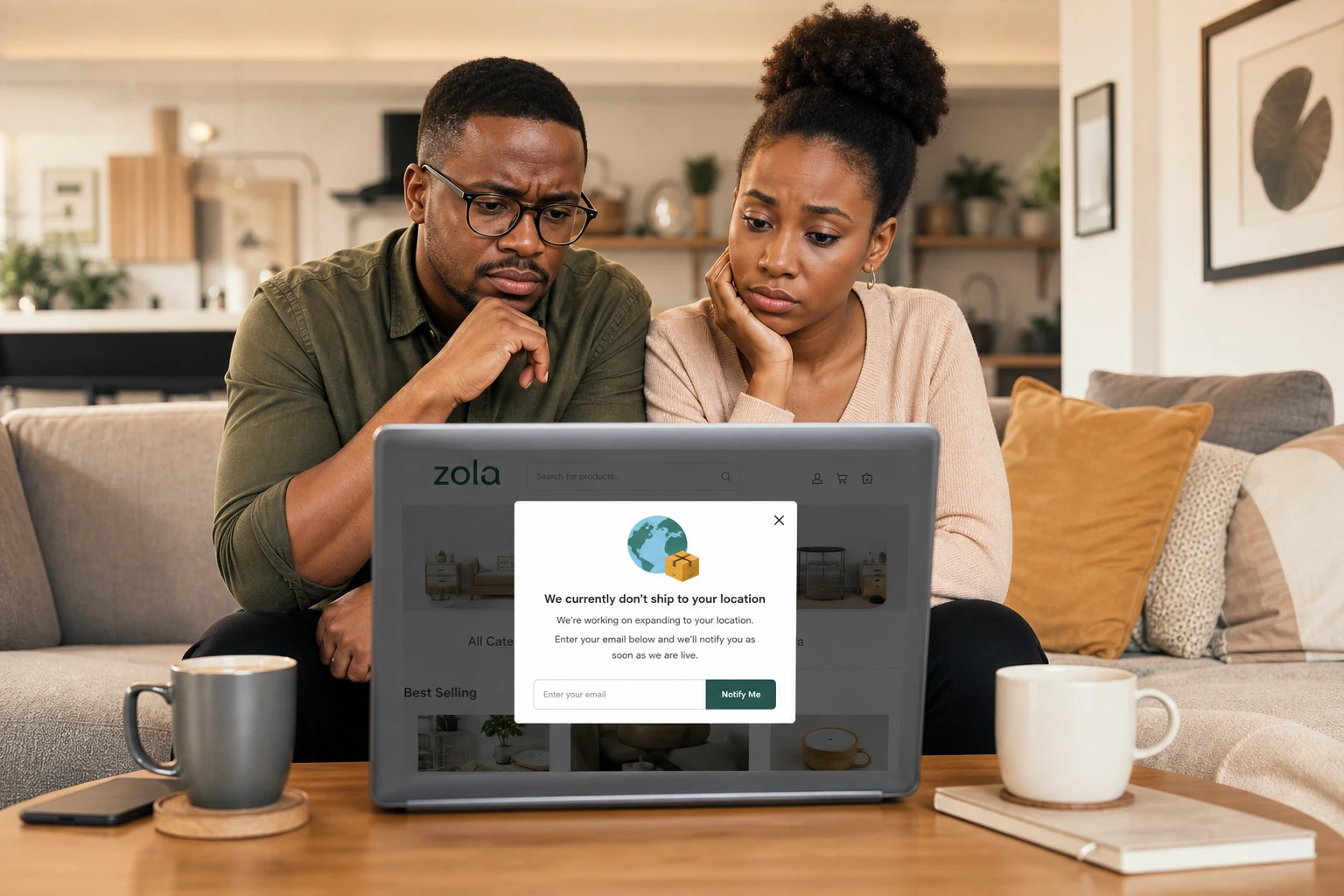
Let me be honest with you. When I first looked at Zola, I was impressed. Clean interface, thoughtful registry experience, multi-event RSVP built right in. It's one of those products you open and immediately think: someone spent real money building this.
Then I tried to use it for a Kenyan wedding.
The short answer is: you can use Zola for a Kenyan wedding, in the same way you can use a spoon to cut steak. It's technically possible. It's also the wrong tool.
Here's the honest breakdown.
What Zola Actually Gets Right
Before I get into the failures, let's give credit where it's due. Zola earns its reputation in several genuine ways.
The interface is exceptional. The drag-and-drop website builder is intuitive in a way that The Knot isn't. You can have a good-looking wedding website live in under an hour — no design experience required. Templates are clean, modern, and mobile-responsive.
Multi-event RSVP is real. This is one area where Zola genuinely shines. You can set up separate RSVP tracking for your traditional ceremony, church wedding, and reception — all under one website. Guests confirm attendance for each event individually. For couples planning multi-event weddings, this is useful.
The registry system is slick. Zola's registry lets you pull items from multiple stores into one list — all managed from a single dashboard. If you're registering for US-available products, this is genuinely well done.
No hidden per-gift fees. Zola charges 2.5% on cash fund contributions — which is disclosed upfront. The base wedding website is free. Custom domain is $17.99/year, which is reasonable.
Zola is a legitimately good product. This is important to say clearly. What follows isn't a criticism of Zola's execution — it's a criticism of its relevance to you.
Where Zola Completely Falls Apart for Kenya
The Registry Ships to US Addresses Only
This is not a minor inconvenience. It is a structural incompatibility.
Zola's registry — including their cash funds — is built around US payment infrastructure. Physical gifts ship to US addresses only. There are no exceptions and no workarounds built into the platform. If your guests are in Nairobi, Kisumu, or Mombasa, they cannot receive anything from a Zola registry unless they have a US shipping address.
You might think: fine, I'll just use the cash fund. But Zola's cash funds are processed through US payment systems. Your guests would need an international credit or debit card to contribute. Most Kenyan guests don't operate that way — and shouldn't have to.
For more on what a Kenya-compatible registry actually looks like, see best wedding registries in Kenya.
No M-Pesa. Full Stop.
M-Pesa processes roughly half of Kenya's GDP in transactions annually. It's not a niche payment method — it's how money moves in Kenya.
Zola has no M-Pesa integration. None. There's no workaround, no third-party plugin, no clever setup that bridges this gap. If a guest wants to give a gift through your Zola registry, they need a card that works on US payment systems.
For a wedding in Nairobi with 300 guests, the majority of whom use M-Pesa as their primary payment method, this is a dealbreaker. Full stop.
If cash contributions via M-Pesa matter to you (and they should), you need a platform built for that. Harusi Hub's registry accepts M-Pesa contributions directly — guests send via their phone, the couple tracks everything from a dashboard.
Vendor Search Is Useless for Kenya
Zola has a vendor marketplace. It's one of their premium features. Search for a caterer, a photographer, a florist — the results are excellent.
If you're in New York.
The vendor directory covers US-based professionals. If you search for a wedding photographer in Nairobi, you get nothing useful. Same for caterers in Mombasa, DJs in Kisumu, or venues in Nanyuki. The infrastructure simply isn't there for Kenya.
This isn't something that'll be fixed with a small update — it would require building an entirely different data layer for the Kenyan market.
RSVPs Require Email Addresses
Zola's RSVP system is tied to email. Guests receive invites and confirm via email. This creates a real problem in Kenya, where wedding guests often communicate exclusively via WhatsApp and phone. Many older guests — particularly extended family members — don't have active email accounts, or have email accounts they check once a quarter.
You'll end up sending RSVP links that your aunt forwards to her neighbor who reads it off a screenshot. The tracking breaks. The dashboard numbers become unreliable.
Harusi Hub's RSVP system is built around phone numbers, not email. Guests confirm via a WhatsApp-ready link shared directly. You track every response in real time. More detail on how that works: collecting wedding RSVPs by phone number.
The Premium Tier Adds Up
Zola's free tier is genuinely usable. But if you want deeper customization — custom CSS, custom HTML, advanced design controls — you're looking at $19.99 per month. For a wedding website you'll use for roughly 12 months of planning, that's $240 before you've paid for a single decoration.
Most couples don't end up needing this level of customization. But it's worth knowing the pricing ceiling before you commit.
The Quick Summary
| What you need | Zola | Harusi Hub |
|---|---|---|
| M-Pesa registry | No | Yes |
| Cash contributions from Kenyan guests | Very limited (card required) | Yes — M-Pesa direct |
| RSVP by phone number (no email) | No | Yes |
| Kenya-based vendor directory | No | Yes |
| Multi-event RSVP | Yes | Yes |
| Registry shipping to Kenya | No | N/A (digital contributions) |
| Free custom website | Yes (domain $17.99/yr) | Yes (free URL) |
So Can You Use Zola for a Kenyan Wedding?
If your guests are primarily Kenyan, use M-Pesa, and live in Kenya — no. Not practically. You'll hit the M-Pesa wall almost immediately, and the registry becomes unusable for your local guests.
If you have a significant number of US-based diaspora guests who want to send physical gifts from American stores, Zola makes sense in addition to a Kenya-focused platform — not as your primary planning hub.
For the actual day-to-day planning, guest management, and registry, you need a platform built for Kenya. That means M-Pesa integration, phone-number RSVPs, and vendors who actually operate in your city.
You can see how the platforms compare in full detail in our breakdown of Harusi Hub vs The Knot vs Zola, and for a direct feature-by-feature comparison, see Harusi Hub vs Zola for African couples.
For everything else — and there's a lot of everything else — there's Harusi Hub.
Built for Kenyan weddings, not American ones
M-Pesa registry, phone-based RSVP, and a website builder that works for how you're actually planning.
Start Planning Free on Harusi Hub