
Best Wedding Registry Platforms That Accept M-Pesa
Compare wedding registry platforms that accept M-Pesa in Kenya. Most don't — here's what actually works for Kenyan couples collecting gifts.
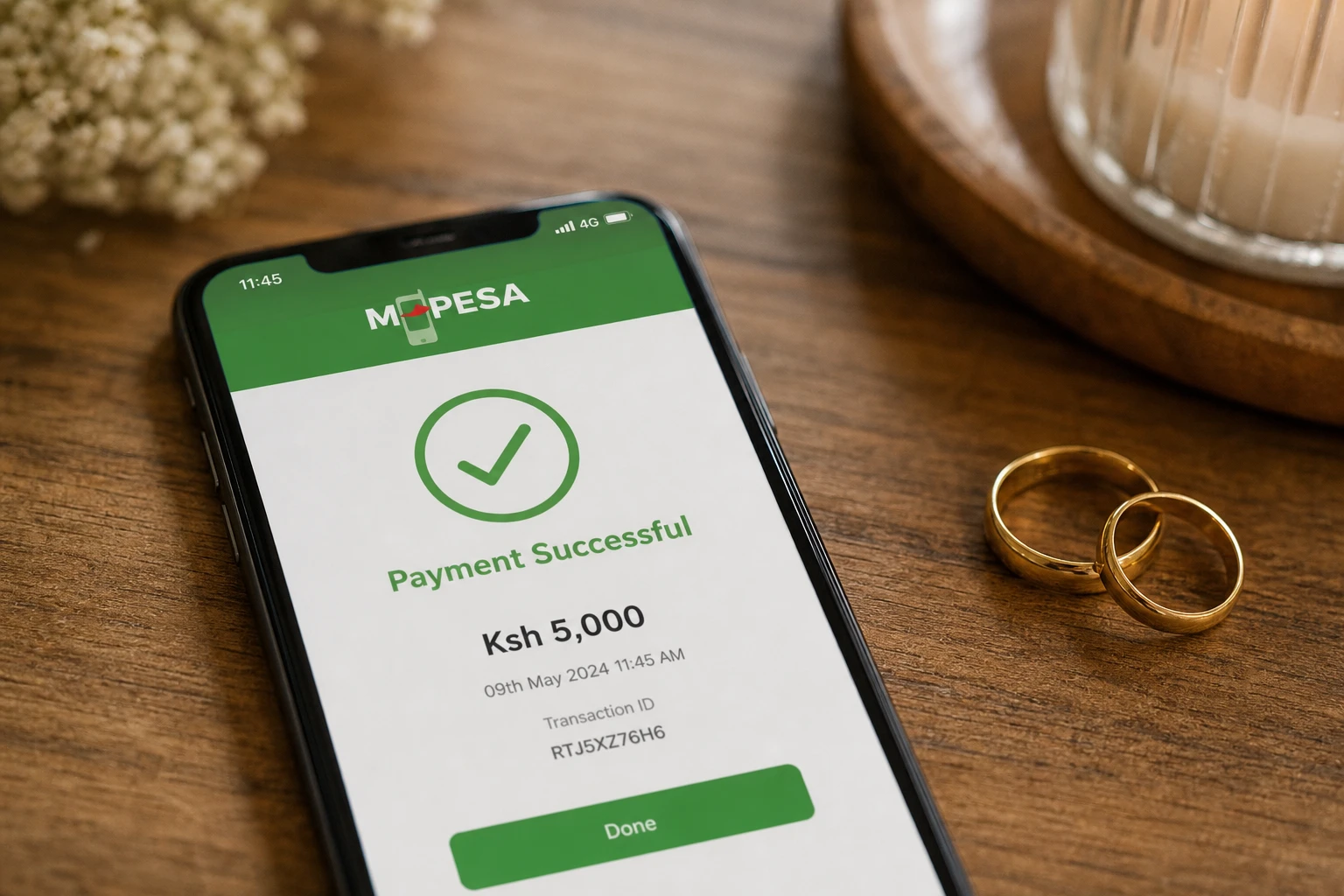
Here is the short answer: very few wedding registry platforms accept M-Pesa, and most that operate globally do not.
The longer answer is worth reading if you are a Kenyan couple trying to figure out how to set up a gift registry that your family and guests can actually use. Because most major wedding registry platforms are US-built, and M-Pesa is not something they have prioritised — despite M-Pesa being used by over 30 million people in Kenya alone.
This article ranks the available options honestly and explains the workarounds couples are using when a full M-Pesa registry isn't available.
Why M-Pesa Matters for a Kenyan Wedding Registry
Wedding registries in Kenya operate differently from Western gift lists in a few important ways:
Cash contributions are normal and expected. Guests in Kenya frequently give cash or money rather than physical items. A registry that only lists physical products at US retailers is useless for a Kenyan wedding.
M-Pesa is the primary payment mechanism. The majority of Kenyan adults use M-Pesa for everyday transactions. Asking guests to enter a credit card number on a US website is a barrier that most guests will simply not cross.
Registry links are shared on WhatsApp. The registry link needs to work when sent via WhatsApp message, open cleanly on a basic Android phone, and require no account creation from the guest.
International shipping doesn't apply. Registry platforms built around Amazon US, Williams Sonoma, or Crate & Barrel have zero utility for Kenyan guests who cannot order from those retailers.
Evaluation Criteria
- M-Pesa acceptance (direct or through integration)
- Cash/monetary contributions
- Kenya-accessible products (if physical items)
- WhatsApp link sharing
- Guest experience on mobile (no required account)
- Couple-side management (withdrawal or access to funds)
- Price
Platform Breakdown
1. Harusi Hub Registry — M-Pesa Native
Harusi Hub's gift registry is built around M-Pesa. Guests contribute via M-Pesa directly to the couple's registry. No credit card, no international payment gateway, no account required from the guest.
How it works:
- You list registry items (physical gifts, experiences, cash fund goals, or a general contribution fund)
- Each item or fund has a target amount in KES
- Guests open the registry link — works on WhatsApp, SMS, browser
- They select an item or contribute to a fund and pay via M-Pesa
- You receive contributions directly; no third-party intermediary holds funds
- Real-time dashboard shows contribution status per item
What works:
- Native M-Pesa integration — no workaround needed
- Cash funds work as well as physical items
- KES throughout; no currency confusion
- Mobile-optimised guest experience
- Link works cleanly in WhatsApp previews
- No minimum registry value or percentage taken on contributions (on the free plan)
Limitations:
- Physical items on the registry are sourced and managed by the couple; the platform doesn't handle shipping logistics for physical goods
- Harusi Hub is East Africa-focused; less relevant for diaspora gifts from outside Kenya
Price: Free on the base plan.
Best for: All Kenyan couples. This is the primary recommendation.
See also: Best Wedding Registries in Kenya — Full Guide
2. M-Pesa Till or Paybill (Direct)
Many Kenyan couples bypass registry platforms entirely and simply share an M-Pesa till number or Paybill number. Guests send money directly, and the couple tracks contributions manually.
What works:
- 100% M-Pesa native
- Zero platform fees
- Guests know exactly how to do it — no learning curve
- Can be added to any wedding website as a simple line of text
What doesn't work:
- No gift list — guests can't see what you want or contribute to a specific item
- Tracking contributions manually is time-consuming at large scale
- No structured acknowledgement or thank-you tracking
- No separation of "general fund" vs specific gifts
- Looks less organised on the wedding website
Price: Free (standard M-Pesa rates apply on the sender side).
Best for: Couples who want simplicity and are not concerned with a structured gift list. Good as a supplement to a Harusi Hub registry for guests who prefer direct M-Pesa payments.
3. Zola Cash Registry
Zola introduced a cash registry feature that allows guests to contribute money toward experiences or goals. The payments process through Zola's US-based payment infrastructure.
What works:
- Clean cash fund interface
- Guests can contribute to named goals (honeymoon fund, house deposit, etc.)
- Good mobile experience
What doesn't work for Kenya:
- Payment requires a credit or debit card — M-Pesa is not accepted
- Funds are held in USD and disbursed to a US bank account
- International transfers to Kenya incur fees and delays
- Not practical for guests in Kenya who don't have internationally usable cards
Price: Zola takes a small percentage on cash registry contributions.
Best for: Diaspora guests or international guests who want to contribute online with a card. Not suitable as the primary registry for a Kenyan wedding.
4. Joy Cash Registry
Joy offers a similar cash registry feature to Zola, with a clean interface and the ability to set contribution goals.
What works:
- Named funds (honeymoon, home, experience)
- Clean guest-facing experience
- No minimum contribution
What doesn't work for Kenya:
- Payment via credit/debit card only
- No M-Pesa
- USD disbursement; Kenya-based bank access is not straightforward
- Same limitations as Zola for Kenyan guests
Price: Joy takes a processing fee on contributions.
Best for: Diaspora or international card-paying guests as a secondary fund alongside a Harusi Hub M-Pesa registry.
5. The Knot Registry
The Knot's registry is deeply integrated with US retailers and a physical goods-first experience. Cash funds are available but face the same payment infrastructure limitations.
What works for Kenya: Essentially none. The Knot registry is designed for US couples with US retailer relationships.
What doesn't work:
- Physical items ship to US addresses only
- No M-Pesa
- Cash fund requires credit card
- No Kenya-relevant product listings
Price: Free; retailers pay The Knot for placement.
Best for: Not recommended for Kenyan couples.
Comparison Table
| Feature | Harusi Hub | M-Pesa Direct | Zola | Joy | The Knot |
|---|---|---|---|---|---|
| M-Pesa accepted | Yes | Yes | No | No | No |
| KES currency | Yes | Yes | No (USD) | No (USD) | No (USD) |
| Cash/monetary funds | Yes | Yes (unstructured) | Yes | Yes | Yes |
| Itemised gift list | Yes | No | Yes | Yes | Yes |
| WhatsApp link works | Yes | N/A | Yes | Yes | Yes |
| No guest account required | Yes | Yes | Yes | Yes | Yes |
| Kenya-available physical items | Couple-managed | N/A | No | No | No |
| Funds accessible in Kenya | Yes (M-Pesa) | Yes | Difficult | Difficult | No |
| Free | Yes | Yes | Fees apply | Fees apply | Free/fees |
Final Recommendation
For Kenyan couples, the registry strategy should be:
Primary: Harusi Hub M-Pesa registry — covers most guests.
Secondary (for diaspora or international guests): Zola or Joy cash fund, disbursed to an international account you control.
Fallback: Direct M-Pesa Paybill/till shared in the wedding website, for guests who prefer sending money directly.
Using a US registry platform as your primary tool will leave the majority of your Kenyan guests unable to contribute without friction. That friction translates into fewer contributions and more manual follow-up.
Set up your M-Pesa wedding registry with Harusi Hub →
Related reading: