
Questions to Ask Your Wedding Videographer Before Booking in Kenya
The essential questions to ask a wedding videographer in Kenya before you sign. Coverage options, costs, deliverables, and red flags to watch for.
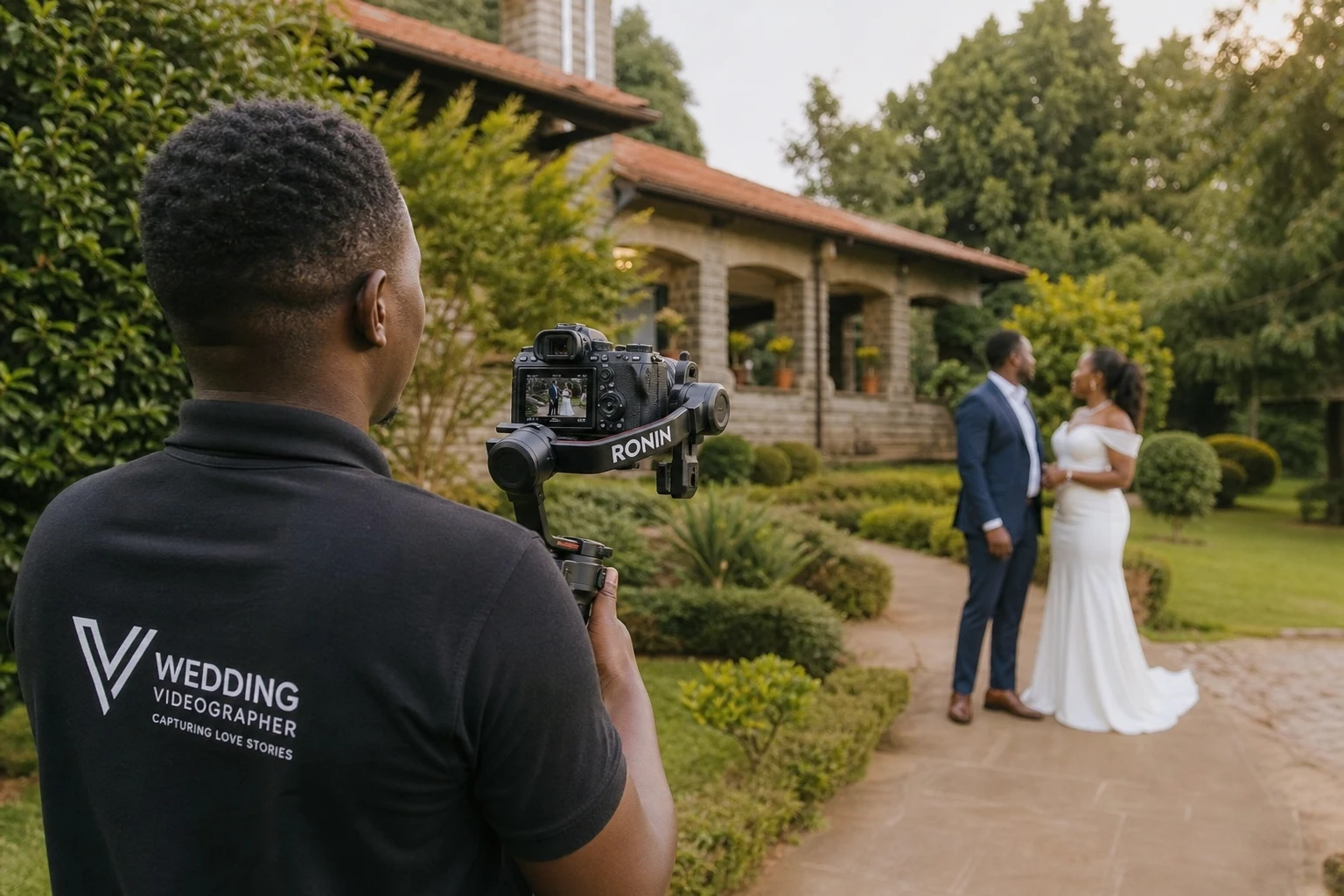
A wedding video is the one thing that will let you hear your vows again, see your guests dancing, and watch your parents' expressions at moments you were too overwhelmed to notice in real time. Unlike photos, video captures sound — the crowd cheering when you are announced, your grandmother's laugh, the exact words of the speech that made the room cry.
The Nairobi wedding videography market has grown significantly in the past five years. There are highly skilled cinematic videographers, solid reliable documentary operators, and a range of newer entrants who produce highly variable work. Knowing the right questions to ask before booking protects you from disappointment on a day that cannot be re-shot.
Here are the questions that matter.
Before You Even Meet: Portfolio Due Diligence
Review at least two complete films, not just highlight reels.
Highlight reels are edited to show the best 2-3 minutes of the day set to music. Every videographer has a good highlight reel. What you need to see is a full wedding film (15-30 minutes) to understand:
- How they handle quieter, slower moments
- How the audio quality sounds in a crowded reception hall
- How they cover events when multiple things are happening simultaneously
- Whether their pacing and music choices align with what you want
Ask specifically: "Can you share a full wedding film, not just a highlight reel?" If they do not have one to share, that is important information.
Questions About Coverage
1. How many videographers will be covering the wedding?
One videographer can cover a single camera angle at a time. During the ceremony, a single operator faces a choice: wide shot of the whole scene, or close-up of the couple's faces. Two videographers means both. For weddings over 100 guests or with multiple events happening simultaneously, a second camera operator is not a luxury — it is the difference between a complete record and a partial one.
2. What does your standard package cover in terms of hours?
Get the exact coverage start and end time. If your reception runs late and the videographer's contract ends at 8 PM, you may lose the first dance or the cake cutting. Understand the overtime rate before signing.
3. Do you cover the getting-ready portion?
Some packages begin at the ceremony. If you want getting-ready footage — the dress going on, the final hair touches, the groom and groomsmen — confirm this is included and what time they will arrive.
4. Will you be the videographer on the day, or might you send a team member?
This is more common than couples expect. You booked based on a specific person's portfolio. Confirm in writing that the person whose work you reviewed will be the lead on your day. If they send a team, ask who specifically and request to see that person's portfolio.
Questions About Equipment
5. What camera and audio equipment do you use?
You do not need to know camera models by heart, but a professional should be able to tell you clearly. The relevant questions are:
- Do you use multiple cameras simultaneously?
- How do you capture audio during the ceremony? (Wireless lapel microphone on the groom is the standard professional approach — it captures both voices clearly during vows)
- How do you handle the reception speeches? (A direct feed from the PA system combined with backup cameras is best)
6. Do you use a drone?
Aerial footage of Kenyan venues can be spectacular — particularly outdoor or garden venues. If drone footage is in the package, ask whether the operator is licensed with the Kenya Civil Aviation Authority (KCAA). Unlicensed drone operation is illegal in Kenya and can create liability issues. Most professional videographers who offer drone services are compliant, but confirm.
7. How do you handle low-light conditions?
Evening reception halls in Kenya often have ambient lighting designed for atmosphere, not video. Ask what lights or additional equipment they bring. Ask to see footage from a comparably lit venue.
Questions About Deliverables
8. What exactly do I receive at the end?
Get a complete list in writing:
- How many films? (Highlight reel, ceremony film, full reception film, toasts only, etc.)
- What is the length of each?
- In what format are they delivered? (USB drive, online download link, streaming link)
- How many revision rounds are included?
- Can I request specific songs or must you use your own music choices?
9. What is the delivery timeline?
Wedding video editing is time-intensive. Standard turnaround in Kenya ranges from 6 to 16 weeks, depending on the package and the videographer's workload. Get the specific date or deadline in writing. Ask what happens if they miss it.
10. Who owns the copyright to the footage?
In most cases, the videographer retains copyright but licenses usage rights to the couple. Understand what you are permitted to do with the film: Can you post it on social media? Can you use it commercially? Can you share a streaming link with family abroad? Most videographers are accommodating but confirm in writing.
11. Do you back up the footage, and how?
Raw wedding footage is irreplaceable. Professional videographers keep multiple backups. Ask specifically:
- "Where do you store raw footage after the wedding?"
- "How long do you keep raw files before deleting them?"
- "What happens if a card fails during the event?" (A professional will have a backup recording system)
Questions About Working Style and Day Coordination
12. Have you worked at my venue before?
Familiarity with a venue is a genuine advantage. A videographer who has worked at your venue knows the light at different times of day, knows where to position for ceremony coverage, and may already have a relationship with the venue coordinator. If they have not worked there, ask if they plan to do a site visit before the day.
13. How do you coordinate with the photographer?
An experienced videographer and photographer work around each other fluidly. A poor pairing can result in each blocking the other's shots at critical moments. Ask how they typically coordinate with the photographer. Ask your photographer the same question about videographers.
14. Are there any moments during the day when you stop rolling?
Some videographers take breaks during the cocktail hour or meal service. Confirm when continuous coverage applies and when they are not actively recording.
15. What is your approach to directing versus observing?
Some videographers take an active directorial role — asking couples to walk through arches again, repeat a first look, or recreate a moment. Others operate purely documentary. There is no correct answer, but know which approach your videographer uses so you can decide whether it aligns with how you want to experience your day.
Questions About Contract and Payment
16. What does your contract include regarding cancellation?
Get clear terms on:
- Deposit amount and whether it is refundable
- What happens if they cancel (illness, emergency)
- What happens if you cancel or postpone
17. What is included in the price quoted, and what costs extra?
Common extras include:
- Additional hours beyond the package
- Drone footage
- Same-day edit or highlights reel
- Rush delivery
- Second videographer
- Travel outside Nairobi
Ask for a full pricing menu upfront so there are no surprises.
Red Flags
Watch for these signals that a videographer may not be ready for a professional booking:
- Cannot provide a full wedding film to review (only highlights)
- Cannot explain their audio capture approach
- Vague on delivery timeline ("a few months")
- Does not have a written contract
- Has never worked at your venue type (outdoor vs indoor, garden vs ballroom) and shows no interest in a site visit
- Communicates poorly or inconsistently during the inquiry process — this will not improve on the wedding day
How Much Does a Wedding Videographer Cost in Kenya?
Videography in Kenya typically ranges from:
- KSh 25,000-50,000 for a single videographer, basic highlight reel, standard delivery
- KSh 50,000-100,000 for two videographers, full ceremony film plus highlight reel
- KSh 100,000-200,000+ for cinematic package with drone, same-day edit, multiple films, and premium post-production
For a full comparison, see our guide on wedding photographer cost in Kenya which also covers how video pricing compares to photography.
Build your photographer and videographer costs into your overall budget using the Harusi Hub budget tracker, and use the wedding day timeline planner to share your schedule with your video team well in advance.
Find and Brief Your Vendors in One Place
Use Harusi Hub to track your videographer booking, share your day timeline, and manage all vendor communications from a single dashboard.
Start Planning for Free