
Rainy Season Wedding Tips for Kenya (April-May & October-November)
Planning a wedding during Kenya's rainy seasons? Here's how to handle the weather, protect your day, and still have a beautiful event.
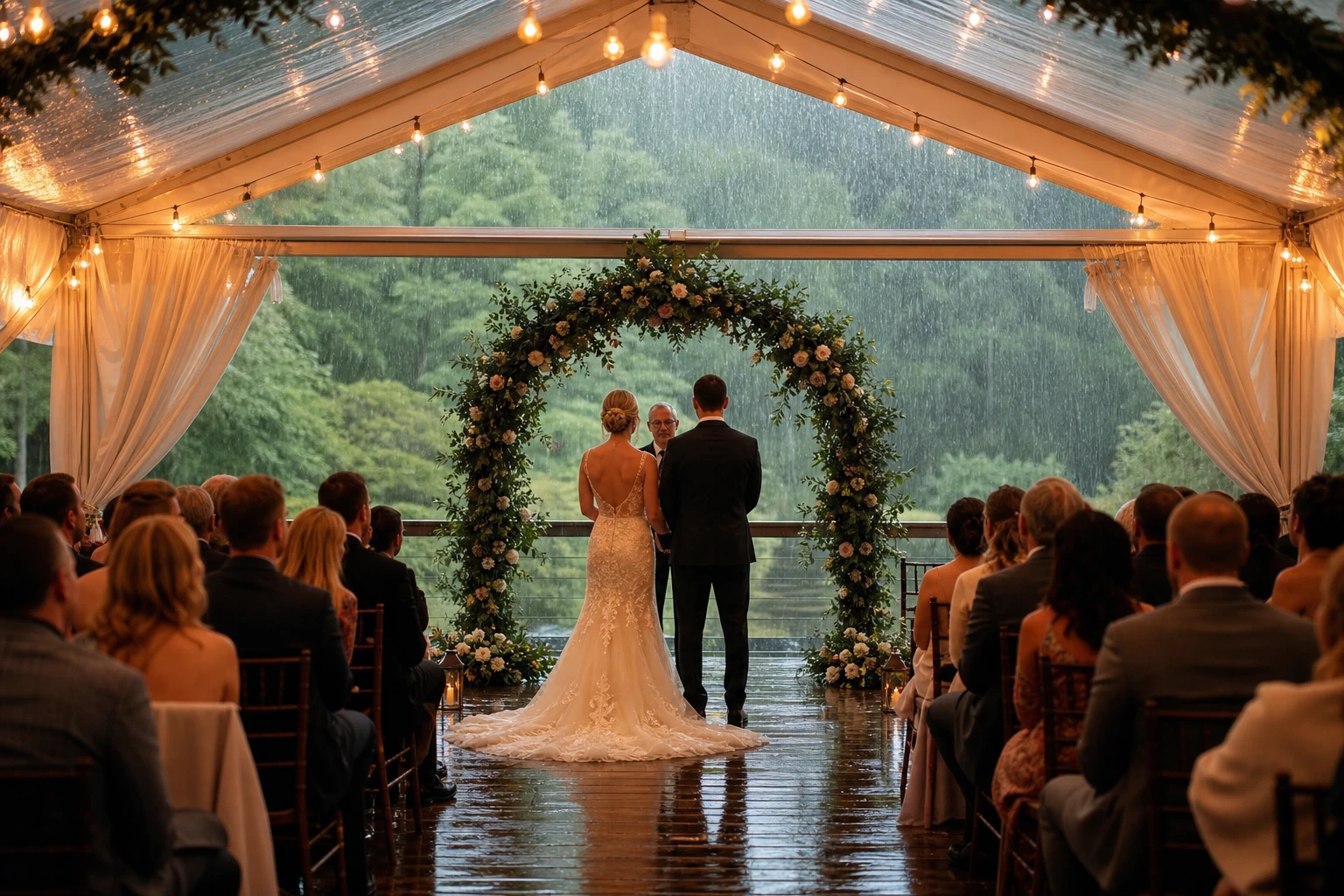
Kenya has two rainy seasons. The long rains fall between April and May. The short rains arrive in October and November. Between them, they cover four months of the year — months when venue prices drop, vendor availability opens up, and couples who plan carefully can have genuinely beautiful weddings at a fraction of the December or August cost.
The couples who struggle in rainy season are the ones who treated the rain as a threat rather than a variable to plan around. Rain in Kenya rarely means an all-day downpour. It usually means an afternoon shower that passes within an hour. If your timeline and your setup account for that reality, a rainy season wedding is very manageable.
Understanding Kenya's Rainy Seasons
Long rains (April–May): More consistent and heavier, especially in Nairobi, Central Kenya, and the highlands. April in particular can have multi-day stretches of overcast, wet weather. May tends to clear more quickly.
Short rains (October–November): Generally lighter and more unpredictable. Rain often comes in the afternoon and evening. October and November mornings are frequently clear and sunny. Many couples find October to be the more manageable of the two short-rain months.
Geography matters significantly. Nairobi, Limuru, Kiambu, and the Central highlands receive more rain than Naivasha (which sits in a rain shadow), the Rift Valley, or the coast. If you are committed to a rainy season date, your venue choice matters more than your date choice.
The Financial Case for Rainy Season
This is worth stating directly. A venue that charges Ksh 300,000 in December may charge Ksh 180,000–220,000 in April. Photographers, caterers, and florists often have better availability and are more willing to negotiate on rate. Flowers are generally less expensive. Hotels drop rates for guest accommodation.
For couples working within a real budget, rainy season is not a compromise — it is a strategy. Use the savings on upgraded food, better photography, or a honeymoon that is not an afterthought. See the free wedding budget tracker for a way to model what the savings actually look like across your full vendor list.
Venue Selection Is Everything
If you are getting married in April, May, October, or November, your venue shortlist should be built around one question: what happens if it rains at 3pm?
Fully indoor venues remove the question entirely. A hotel ballroom, a restaurant with a private events space, or a fully covered hall gives you complete weather control. The tradeoff is typically aesthetic — indoor venues do not always have the garden views and natural light that couples love about outdoor settings.
Hybrid venues are often the best option. These are venues with both an outdoor garden or lawn area and a covered indoor section large enough to hold your guest list. In dry weather, you use the outdoor space. If rain arrives, you move inside. Many of Nairobi's better event venues — particularly in Karen, Gigiri, and Runda — offer this configuration.
Tent solutions can work but require careful planning. A properly anchored and weighted marquee on a venue with good drainage can handle Kenyan rain well. An underweight tent on grass that waterlogged three days ago is a problem. Ask venues specifically about their drainage and their tent specifications before committing.
Questions to ask every venue:
- Does the venue have a fully covered fallback that can accommodate my guest count?
- What is the drainage like on the lawn and parking area?
- Has this venue hosted weddings during the long rains? Can I speak to a couple who had theirs here in April or May?
Build Your Timeline Around Afternoon Rain
Kenya's rain pattern, particularly during the short rains, tends to come in the afternoon. Mornings are often clear. This gives you a strategic lever.
Consider structuring your day so that:
- Outdoor photography and garden cocktail hours happen before 1pm
- The transition to the reception hall or covered area is complete before 3pm
- Any outdoor elements you must keep — like a garden ceremony — are scheduled for 10am–11am
This is not always possible depending on your religious or cultural requirements, but where you have flexibility, use it.
For a full day-of scheduling template, see the wedding day timeline guide.
What to Put in Your Vendor Contracts
Every rainy season wedding contract should address weather explicitly. Before signing:
With your venue: Confirm in writing that the covered indoor space is available to your party at no additional charge if rain requires you to move. Some venues treat the indoor space as a separate booking.
With your photographer: Discuss their approach to rain. Good photographers can work in rain — some of the best wedding photos involve overcast skies and reflections. What you want to know is whether they will adjust the schedule proactively and whether they carry weather protection for equipment.
With your decor provider: Ask about their outdoor installation and what they do if rain damages setups before or during the event. Who covers replacement costs?
With your caterer: For outdoor food stations, confirm they have covers and that food safety protocols account for wet conditions.
Dressing for Rainy Season
The bride: If your ceremony or portrait session has outdoor elements, talk to your dress designer or rental provider about how the fabric handles moisture and ground contact. A cathedral train on wet grass is not just uncomfortable — it can be damaged. Bustling options, detachable trains, and ankle-length alternatives are all worth considering.
Guests: Communicate clearly in your wedding communications that the event has outdoor elements and the date falls in a rainy period. Most guests in Kenya will dress appropriately without needing to be told twice, but a note in the invitation — even indirect, like mentioning the garden setting — helps.
The bridal party: Open-toe shoes and outdoor grass coverage are a specific combination to think through. Consider flats or closed-toe options for a garden ceremony if you want the bridal party to move comfortably.
Rainy Season Decor That Works
Rain actually creates opportunities that dry season does not:
- Candles and warm lighting look better indoors or under a tent than in bright afternoon sun. A rainy season reception with soft candlelight and draped fabric is striking.
- Greenery and tropical arrangements hold up better in humidity than heavily dried or papery elements.
- Deep colour palettes — forest greens, burgundy, navy — work naturally with the grey-sky backdrop that overcast days provide.
See wedding decor trends in Kenya for more on palettes and arrangements that work in different weather conditions.
The Day-Of Rain Plan
Have a named person — your wedding coordinator, your maid of honour, or a trusted committee member — whose role includes executing the rain plan if needed. This person should:
- Know where the venue's covered space is and how to direct guests there
- Have the venue contact's number saved
- Know which outdoor elements have a covered equivalent and which get cancelled entirely
- Be able to make the call to move inside without needing to consult the couple first
The couple should not be managing weather logistics on their wedding day. Delegate this clearly and brief the person thoroughly.
April vs. October: Which Is Better?
If you have flexibility on your rainy season month, October is generally the more forgiving choice:
- October mornings in Nairobi are frequently sunny and clear
- Rain in October tends to arrive later in the afternoon and clear faster
- April can bring multi-day stretches of overcast weather, making outdoor morning photography less reliable
That said, many couples have had beautiful April and May weddings. The difference is less about avoiding rain and more about planning for it.
For a broader view of how all twelve months compare, see the best month for a wedding in Kenya.
Rainy Season Is Not a Second-Best Choice
Couples who plan well in rainy season often reflect that their wedding had a more intimate, cared-for feeling than the mass-wedding experience of a peak December weekend. Vendors are less stretched. Venues are more attentive. Prices allow for upgrades elsewhere.
Rain does not ruin weddings. Poor planning does.
See the Weather Outlook for Your Wedding Date
Harusi Hub's weather outlook feature shows you historical rain patterns for your venue region so you can plan your timeline and backup options with real data.
Check Your Date