
Rustic Wedding Ideas for Kenya (Without Copying Pinterest)
How to pull off a genuinely rustic wedding in Kenya using local materials, real venues, and ideas that actually work in our climate and culture.
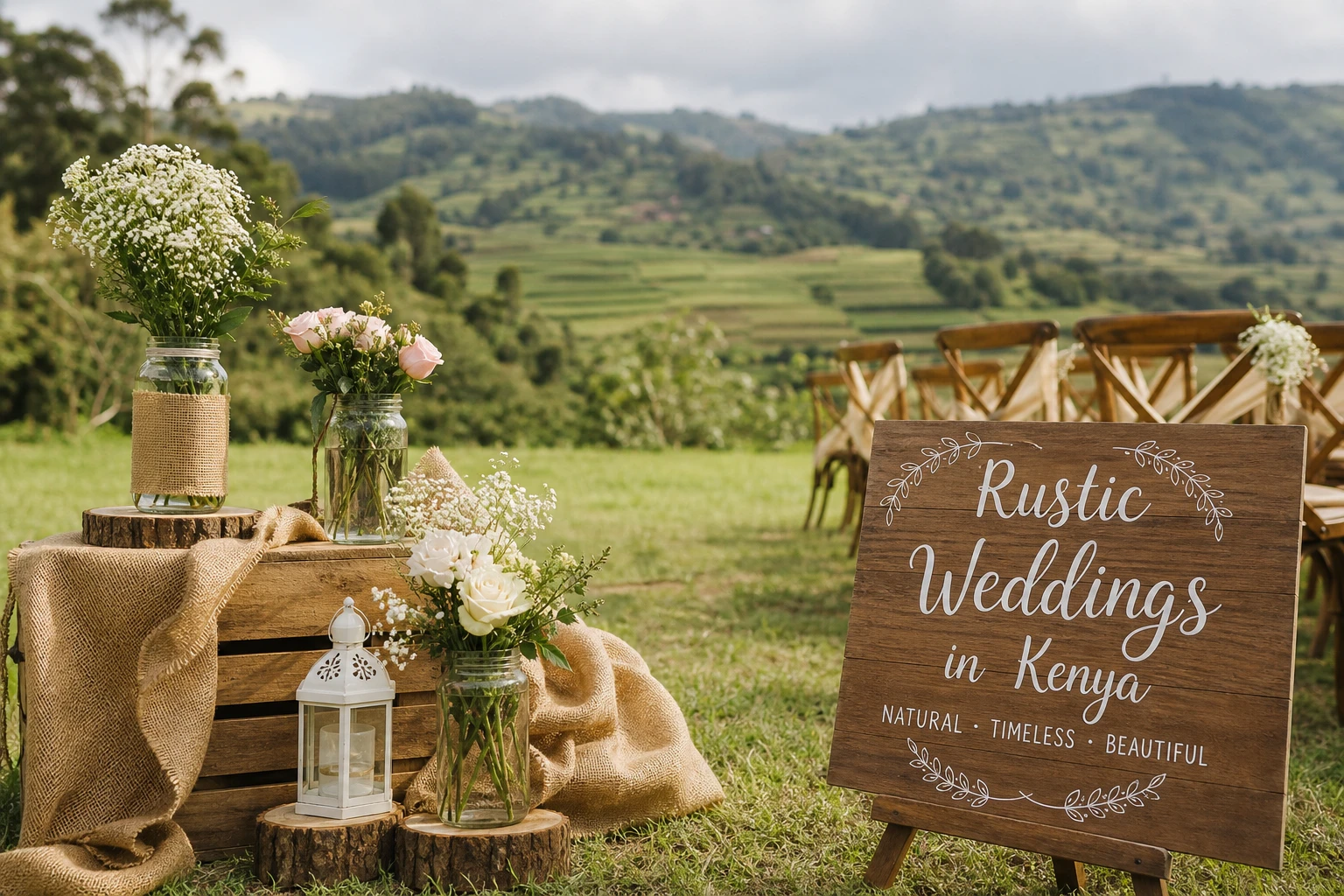
You have seen the Pinterest boards. The mason jars. The burlap table runners. The barn with the Edison bulb strings hanging from exposed wooden beams. It is beautiful — in a Vermont autumn.
The challenge with planning a rustic wedding in Kenya is that most of the visual references for "rustic" come from American farms, English countryside manors, or Tuscan vineyard properties. These aesthetics, imported wholesale, often look borrowed rather than genuine in a Kenyan setting.
The good news is that Kenya has its own rustic vocabulary — and it is richer and more visually interesting than anything on Pinterest.
What "Rustic" Actually Means
Before getting into specifics, it helps to define what rustic means at its core, so you can apply it locally rather than copying images literally.
Rustic is about:
- Natural materials over manufactured ones (wood, stone, clay, woven fibre)
- Warm, earthy colours over bright white or high-gloss surfaces
- Imperfect, handmade details over polished uniformity
- Outdoor or semi-outdoor settings over hotel ballrooms
- Local and seasonal over imported and mass-produced
Every one of those qualities exists in Kenya's design tradition. The application just needs to be local.
Venues That Actually Deliver Rustic in Kenya
This is where your rustic wedding either succeeds or fails. The venue is doing most of the work.
Naivasha and the Rift Valley are Kenya's strongest rustic wedding territory. The volcanic landscape, acacia trees, and proximity to the lake create a natural backdrop that no amount of imported burlap can replicate. Properties like farm estates and lodge-style venues around Lake Naivasha offer the kind of space and setting that make rustic aesthetics feel earned rather than staged.
Limuru and the Central Highlands tea country offers rolling green hills, mist, and old colonial-era farm buildings. This landscape is genuinely different from anything you will find on a generic Pinterest board — and it is distinctly Kenyan. Several properties in Limuru have open-sided event spaces built from stone and timber that require almost no additional decoration.
Oloolua Forest and Karen for couples who want the feel of being in nature without leaving Nairobi. The forest setting provides canopy and natural light. Paired with simple wooden furniture and local foliage, this works without extensive decor investment.
Upcountry farms — particularly in Trans-Nzoia, Nyandarua, or the Aberdares area — if you have family land or connections. Nothing is more genuinely rustic than a family farm. The logistical demands are higher, but the authenticity is unmatched.
For decor ideas that complement these settings, see wedding decor trends in Kenya.
Kenyan Rustic Materials
These materials exist locally, cost less than imported alternatives, and look genuinely right in a Kenyan setting:
Sisal and woven grass: Kenya is a significant sisal producer. Woven sisal placemats, centrepiece wraps, and hanging installations have a texture and warmth that burlap cannot match and that is specifically East African. You can source these from craft markets in Nairobi — the City Market, Maasai Market, and Ngong Road craft stalls.
Acacia and olive wood: Kenyan timber, particularly acacia, has distinctive grain and colour. Wooden signage, table number holders, serving boards, and ceremony arch frames made from local timber look right in ways that imported pine does not.
Terracotta and clay: Kenya has a strong pottery tradition. Terracotta pots as centrepiece holders, clay water vessels, and unglazed bowls filled with greenery are visually grounding and practically inexpensive. Source from pottery workshops in Ngecha, Kisumu, or Nairobi's craft hubs.
Local fresh flowers and foliage: The rustic aesthetic is not about rare blooms — it is about abundance and naturalness. Gypsophila (baby's breath), ferns, eucalyptus, wild grasses, and locally grown garden roses all work better than imported flowers for a rustic setting. They are also significantly cheaper in season.
Beeswax candles: Kenya has a growing craft candle-making industry. Beeswax candles in earthy tones — amber, cream, dusty rose — add warmth and scent. Search for small Nairobi-based candle makers who use local wax.
A Rustic Kenyan Colour Palette
The rustic Pinterest palette — cream, sage, dusty rose, blush — is not wrong, but it needs grounding with colours that speak to the actual landscape:
- Warm terracotta as an accent against cream
- Forest green from highland foliage
- Warm amber and golden tones from acacia and dry grass
- Dusty mauve pulled from bougainvillea
Avoid the temptation to use all of them. Pick two or three and let the venue's natural colours fill the rest.
For more on colour palette building, see wedding colour palettes in Kenya.
Food and Drinks That Match the Aesthetic
Rustic food presentation is an extension of the decor, and here Kenya has real advantages:
Nyama choma stations are not only culturally resonant — they are visually perfect for a rustic outdoor setting. A well-set nyama choma station with wooden boards, clay condiment bowls, and woven serving baskets looks like it belongs at a Kenyan outdoor wedding because it does.
Family-style service over plated courses fits the rustic aesthetic and often costs less. Long communal tables with shared platters of food invite conversation and warmth.
Local produce-forward menus: Feature sukuma wiki made beautifully, pilau with fresh spices, roasted maize. These are not compromise choices — they are the honest version of farm-to-table that rustic aesthetics gesture toward.
Drinks: Local gin (Kenya has good craft options), dawa cocktails served in clay cups, fresh passion fruit juice, and highland tea as a welcome drink. These feel right in ways that a generic cocktail bar does not.
Signage and Stationery
Hand-lettered wooden signs, seating charts on reclaimed timber, menu cards tied to twine. These are achievable in Nairobi.
Several calligraphy artists in Nairobi work on wood and paper and can produce signage that looks genuinely handmade because it is. Ask in wedding communities and Instagram for referrals — this is a growing specialty.
For stationery, kraft paper and recycled card stock are more available than they were a few years ago. Several Nairobi print shops now offer these options.
What to Skip
Some rustic elements that appear endlessly on Pinterest simply do not translate:
Hay bales as seating: In a highland Kenyan setting, hay is typically loose and damp. It sounds charming and photographs awkwardly. Skip it.
Jam jar centrepieces: These are extremely common at Kenyan weddings now and have lost any sense of individuality. If you want the glass vessel effect, use interesting local clay or terracotta containers instead.
Barn settings: Kenya does not really have the red-barn aesthetic. Using a storage structure as a "barn venue" rarely reads the way it does in American photography.
Imported faux-antique furniture: Some rental companies offer imported white wooden chairs and vintage-styled furniture that looks incongruous in a Kenyan outdoor setting. Local timber benches, woven chairs, and canvas director's chairs often look more right and cost less.
The Question of Budget
Rustic weddings have a reputation for being budget-friendly, and they can be — but only if you source materials genuinely locally rather than importing the aesthetic.
If you are going to craft markets, working with local artisans, and letting the venue do most of the visual work, a rustic wedding can be significantly cheaper than a conventional hotel ballroom setup. If you are ordering imported linen, specialty rentals, and custom printed kraft paper, the savings disappear.
A practical tip: visit the venue before your decor consultation, take photos of what is already there (floor texture, wall colour, ambient light quality, surrounding vegetation), and give those photos to your decor provider. Ask them to work with the setting rather than against it.
Build Your Rustic Wedding Mood Board on Harusi Hub
Keep your venue notes, vendor quotes, colour ideas, and decor references in one place — not scattered across WhatsApp and three different notebooks.
Start Planning Free