
How to Handle Plus-Ones at Your Kenyan Wedding (Policy + Wording)
A practical guide to setting a plus-one policy for your Kenyan wedding — navigating extended family expectations, budget, and how to communicate your decision clearly.
In a Western wedding context, the plus-one question is relatively contained: do you allow single guests to bring a date? In a Kenyan wedding context, it is considerably more complex.
You are not just managing romantic plus-ones. You are navigating extended family assumptions, community expectations, and the deeply cultural sense that a wedding invitation extends to the household, not just the named individual. Understanding this is the starting point for any sensible policy.
The Cultural Reality
In Kenya — particularly in communities where weddings are understood as family and community events — an invitation to a relative often carries an implicit understanding that their spouse, adult children, or elderly parent will also attend. This is not rudeness. It is a longstanding social norm in many Kenyan communities, and it comes from genuine warmth toward the event.
The tension arises when the couple is trying to manage a venue with a 150-person capacity and finds they have 200 people RSVP'd because twelve families each brought two extra people.
Acknowledging this dynamic — rather than pretending your wedding is operating on purely Western etiquette rules — is the first step toward handling it gracefully.
Define Your Policy Clearly Before You Start
Before you send a single invitation, make a clear decision. The options are:
Option A: No plus-ones, except named guests. Each invitation goes to specifically named individuals. If you want John and Jane, the invitation reads "John Kamau and Jane Kamau." If you only want John, it reads only "John Kamau." Partners who are not explicitly named are not invited.
Option B: Plus-ones for long-term partners only. Anyone in a relationship of 1+ years (or living together, or engaged) may bring their partner. You will need to find out who qualifies, which requires some coordination.
Option C: Plus-ones for all single adult guests. Every single guest may bring one person of their choice. This is the most generous policy and the most expensive.
Option D: Plus-ones only for the wedding party. Your bridesmaids, groomsmen, and parents get plus-ones. Other guests are invited as named.
Most Kenyan couples with budget constraints land somewhere between Options A and B. The key is that you decide consistently and apply the rule across all guest categories — family and friends alike.
The Extended Family Conversation
The trickiest category is extended family. Aunts and uncles who expect to attend with their adult children. Grandparents who will naturally be accompanied by a caregiver. Family friends who have known your parents for decades and assume the whole household is included.
Some practical approaches:
Involve your parents early. Your parents often have more context about which relatives will push back and which will accept. Give them advance notice of your policy so they are not caught off guard when Aunty Margaret calls asking about her daughter.
Identify the non-negotiables. There will be some relatives for whom excluding their spouse or companion would genuinely damage a family relationship. These are real, and you may decide some exceptions are worth making. Just make them deliberately rather than reactively.
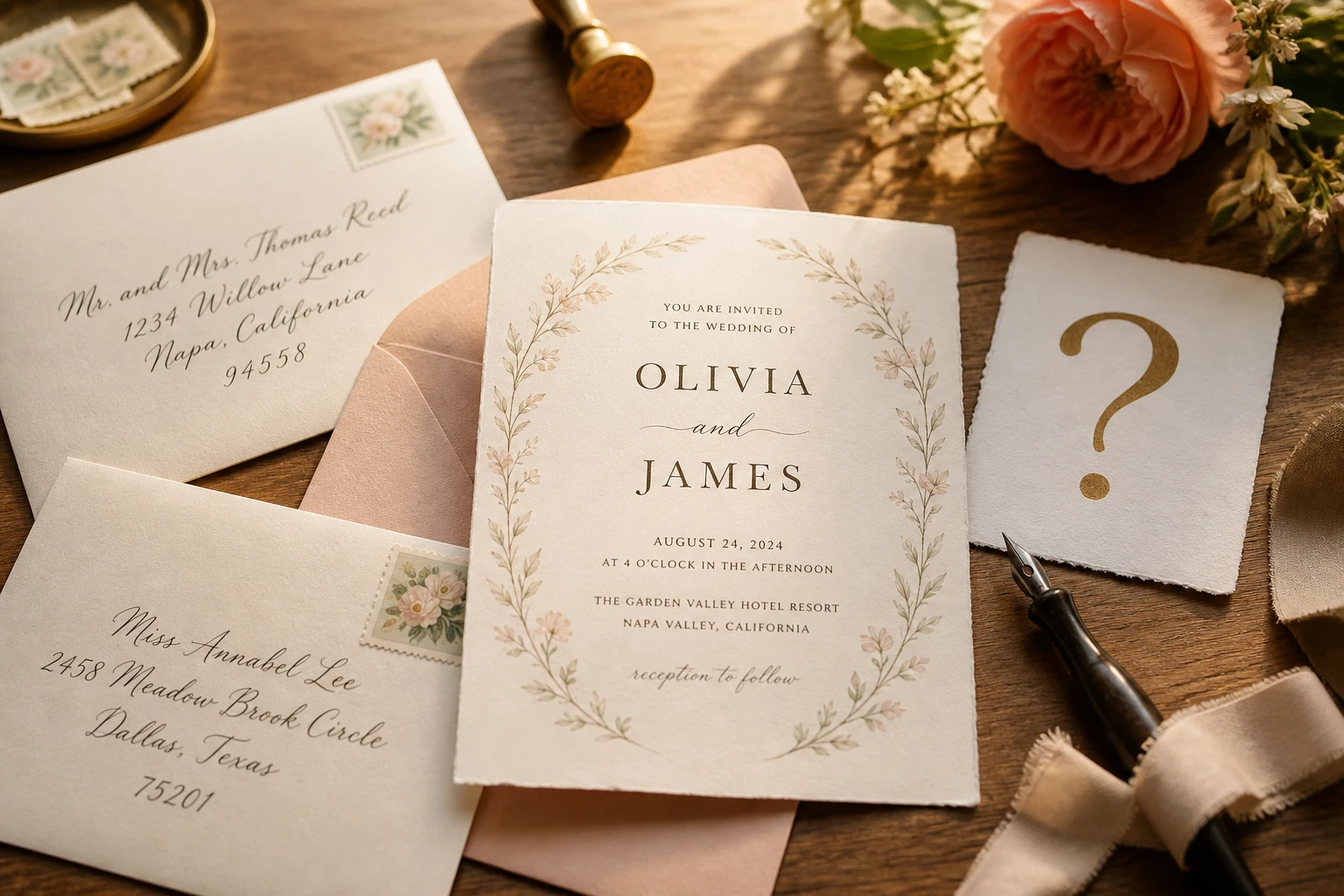
Be specific on invitations. The physical invitation text is your most powerful tool. "Dr. and Mrs. Mwangi" clearly includes two people. "Dr. James Mwangi" clearly does not. The clearer your addressing, the less ambiguity guests need to resolve.
Prepare a brief, kind response for the asks. Because some will ask. See the wording section below.
What to Do About Children
This is technically a plus-one question, though it often gets treated separately. In many Kenyan families, children at weddings are expected — it is seen as a family celebration, not an adults-only event.
If you are restricting children, be prepared for this to be the more culturally charged conversation. Some families will genuinely feel excluded if their young children are not welcome. Handle this thoughtfully:
- Make exceptions for infants (under 2) who cannot be left at home
- Give plenty of notice so families can make arrangements
- Do not make guests feel judged for asking
See the wedding FAQ page guide for how to communicate your children policy clearly on your wedding website.
Managing the Guest List Numbers
If your venue has a hard capacity — and most do — there is no way around the maths. Every unexpected plus-one costs you a seat and a catering cover. At KSh 1,500–2,500 per head for catering alone, twenty extra people adds KSh 30,000–50,000 to your bill unexpectedly.
The guest list management guide covers how to track and manage RSVP numbers. Having a live count of confirmed attendees makes it easier to catch when your numbers are creeping above venue capacity.
For uninvited guests who simply show up — a real possibility in some communities — there is a separate conversation about how to handle that gracefully. The uninvited guests guide covers this specifically.
Wording for Common Situations
On the invitation, for named guests only: "The favour of a reply is requested for the named guests on this invitation. Due to venue capacity, we are unable to accommodate additional guests beyond those listed."
When someone asks if they can bring their partner: "We would love to have you there. Unfortunately we are at maximum capacity and have had to make the difficult decision to limit each invitation to the person or people named. We hope you understand — we can't wait to celebrate with you."
When a family member asks about bringing their adult child: "[Name], it means so much that the whole family wants to be part of our day. We have a very limited venue capacity and have had to be strict about numbers — even on the family side. Your presence means the world to us."
For the wedding website FAQ: "Invitations are addressed to the person or people named on the card. Due to venue capacity, we are not able to accommodate additional guests or plus-ones beyond those named. We appreciate your understanding and look forward to celebrating with you."
One Final Thought
Your plus-one policy is not a statement about how much you value people. It is a logistical decision about a finite space. Most guests, given a clear and kind explanation, will understand. The ones who do not will get over it once the wedding photos are out.
Set your policy, communicate it clearly, and move on to the parts of wedding planning that actually bring you joy.
Manage Your Guest List with Ease
Track RSVPs, plus-ones, dietary needs, and seating — all in one place with Harusi Hub's free guest management tools.
Start Your Free Guest List