
Interfaith Wedding Vows: How to Honor Both Traditions
How to write or adapt wedding vows that genuinely honor two faith traditions — without watering either one down or making anyone uncomfortable.
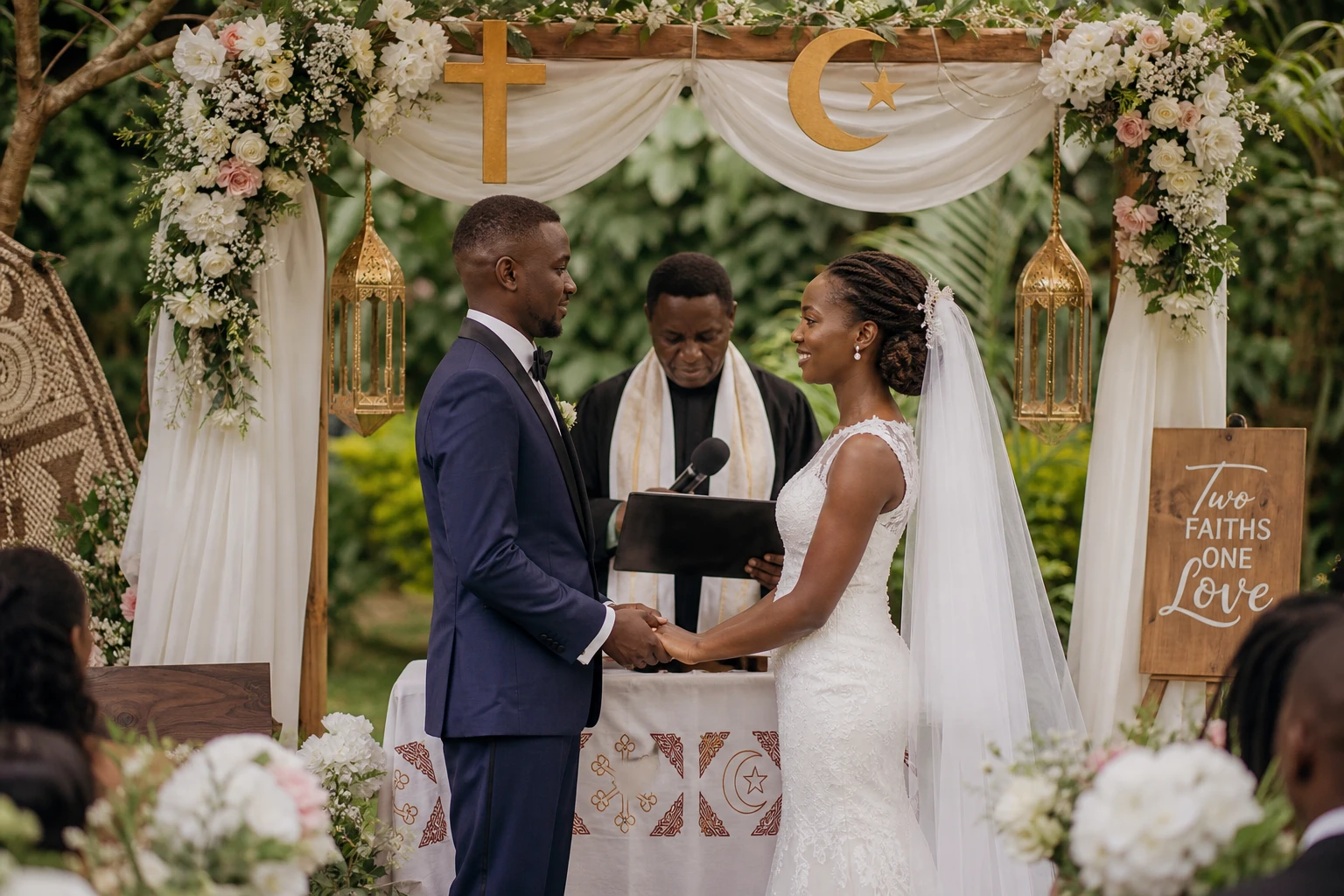
The vows are the moment every guest is waiting for. For interfaith couples, they're also the moment that can feel most impossible to get right.
When you come from different faiths, writing your wedding vows means walking a careful line. Say too much from one tradition and the other family feels like spectators. Say too little from either and the vows feel generic — empty of the very meaning you want them to carry.
The couples who get this right are not those who avoid the tension. They're the ones who lean into it honestly: we are two people from different worlds, and we are choosing each other anyway. That is not a problem to solve. It is the most beautiful thing about your wedding.
Here is how to write vows that honor both traditions — and both of you.
Start With What Vows Actually Are
Before you think about structure or wording, ground yourself in what vows are meant to do across faith traditions.
In a Christian context, vows are a covenant — a binding promise made before God and witnesses. They typically declare love, faithfulness, and commitment through all of life's seasons.
In an Islamic context, the nikah is a contract. The emphasis is on consent, commitment, and the responsibilities both partners accept. The words spoken are often brief and specific: the offer, the acceptance, the mahr.
In a Hindu context, vows are embedded in ritual — the saptapadi, or seven steps around the sacred fire, each step representing a specific promise (nourishment, strength, prosperity, happiness, progeny, lifelong togetherness, friendship and partnership). The vows are as much embodied as spoken.
These traditions are not incompatible. They emphasize different facets of the same thing: a serious, witnessed, lasting commitment between two people. Your job is to find the words that carry that seriousness while reflecting who you both are.
Option 1: Parallel Vows from Each Tradition
One approach is for each partner to speak vows rooted in their own tradition. The Christian partner draws on Christian language; the Muslim or Hindu partner uses language from their tradition. The vows mirror each other in structure but not in theology.
This approach works well when both partners are genuinely observant and when both families want to see their tradition represented clearly. It avoids the problem of asking either partner to say words that don't reflect their actual faith.
Example structure:
Christian partner: "I, [Name], take you, [Name], as my wife/husband — my companion and my love. Before God and these witnesses, I promise to love you faithfully, to be patient with you in difficulty, to honor you in all circumstances, for all the days of my life."
Hindu partner: "I, [Name], take you, [Name], as my wife/husband — my partner in dharma, artha, kama, and moksha. I promise to walk beside you through every step of our life together, to be your strength when you are weary, and to honor the family we are building."
Both vows say the same thing — commitment, love, partnership — but in language that is authentically theirs.
Option 2: Shared Vows Built Around Universal Values
If both partners prefer to say the same words to each other, write vows that are grounded in values both traditions share: love, faithfulness, care in difficulty, lifelong commitment, service to family.
The language of nature, community, and ancestry resonates across Kenyan faiths and cultures. You don't need to name God to make vows sacred — the weight of a public promise before those you love carries its own gravity.
Example:
"I choose you today and every day after. I promise to be your safe place — the one who knows you fully and loves you still. When life is easy, I will celebrate with you. When it is hard, I will stay. I will honor your family as my own, and build with you a home where love is the foundation."
This kind of vow works in any ceremony because it is human before it is religious. Both families can hear it and feel included.
Option 3: Vows Within a Ritual Framework
For couples with a strong Hindu element in their wedding, consider placing the spoken vows within the saptapadi framework — each step representing a different dimension of the commitment. You speak the vow as you take each step together around the fire.
This structure is inherently participatory. It gives the Christian partner a way to engage fully with a Hindu ritual by making the vows their own. A pandit who works with interfaith couples can guide you through this in a way that is spiritually meaningful without requiring theological compromise.
Similarly, some couples begin their Christian ceremony with a moment of dua (prayer) or a reading from the Quran, positioning the Islamic tradition as a blessing on the marriage rather than a competing ceremony.
What to Avoid
Avoid theological contradictions. Don't write vows that ask a Christian partner to affirm Islamic theology, or a Muslim partner to make vows in the name of the Trinity. These cause discomfort not because families are intolerant but because faith is not a costume. Respect what each tradition actually teaches.
Avoid vague spirituality as a filler. "We are blessed by the universe and all its energies" is not a vow — it's a platitude. Say something specific and true.
Avoid asymmetry. If one partner's vows are four sentences and the other's are twelve, the imbalance is visible and felt. Keep them roughly equal in length and weight.
Avoid translation that loses meaning. If you're including Swahili, Arabic, Sanskrit, or Gikuyu phrases in your vows, make sure the translation is accurate and that you understand what you're saying. For more on bilingual vows specifically, see our guide on bilingual wedding vows in English and Swahili.
Involving Both Officiants
If your wedding involves two officiants — a pastor and an imam, or a pastor and a pandit — brief them together in advance. They should know each other's role, the order of events, and what each will say. Two officiants who are cold to each other communicate division at the moment you're trying to declare unity.
Some officiants have experience with interfaith ceremonies and actively enjoy the collaboration. Find them.
A Note on Family During the Vows
This is the most emotionally charged moment of the day. Both families will be watching not just what you say, but how you say it — and how the other family responds.
Brief your families in advance. Explain what the vows will look like and why you made the choices you did. A parent who is caught off guard by vows that sound unfamiliar is more likely to react with discomfort than one who was prepared and consulted.
If you're writing personal vows, consider sharing them with your partner's parent in advance — not for approval, but as a gesture of respect. It says: I want your family to feel honored today, not excluded.
Write Them Together
The best interfaith vows are written together — sitting across from each other, talking honestly about what you believe, what you want to promise, and what language feels true. This conversation is itself a form of vow. It is a preview of how you will navigate everything that comes after.
You don't need them to be perfect. You need them to be yours.
For a full step-by-step guide to writing personal vows from scratch, see our article on writing personal wedding vows in Kenya.
Share your love story the way only you can tell it
Add your story, your journey, and the meaning behind your ceremony to your Harusi Hub wedding website — so every guest arrives understanding what they're celebrating.
Create Your Free Wedding Website