
Wedding Vow Mistakes to Avoid (From Real Kenyan Couples)
The most common wedding vow mistakes Kenyan couples make — from writing too long to reading off a phone — and exactly how to avoid them.
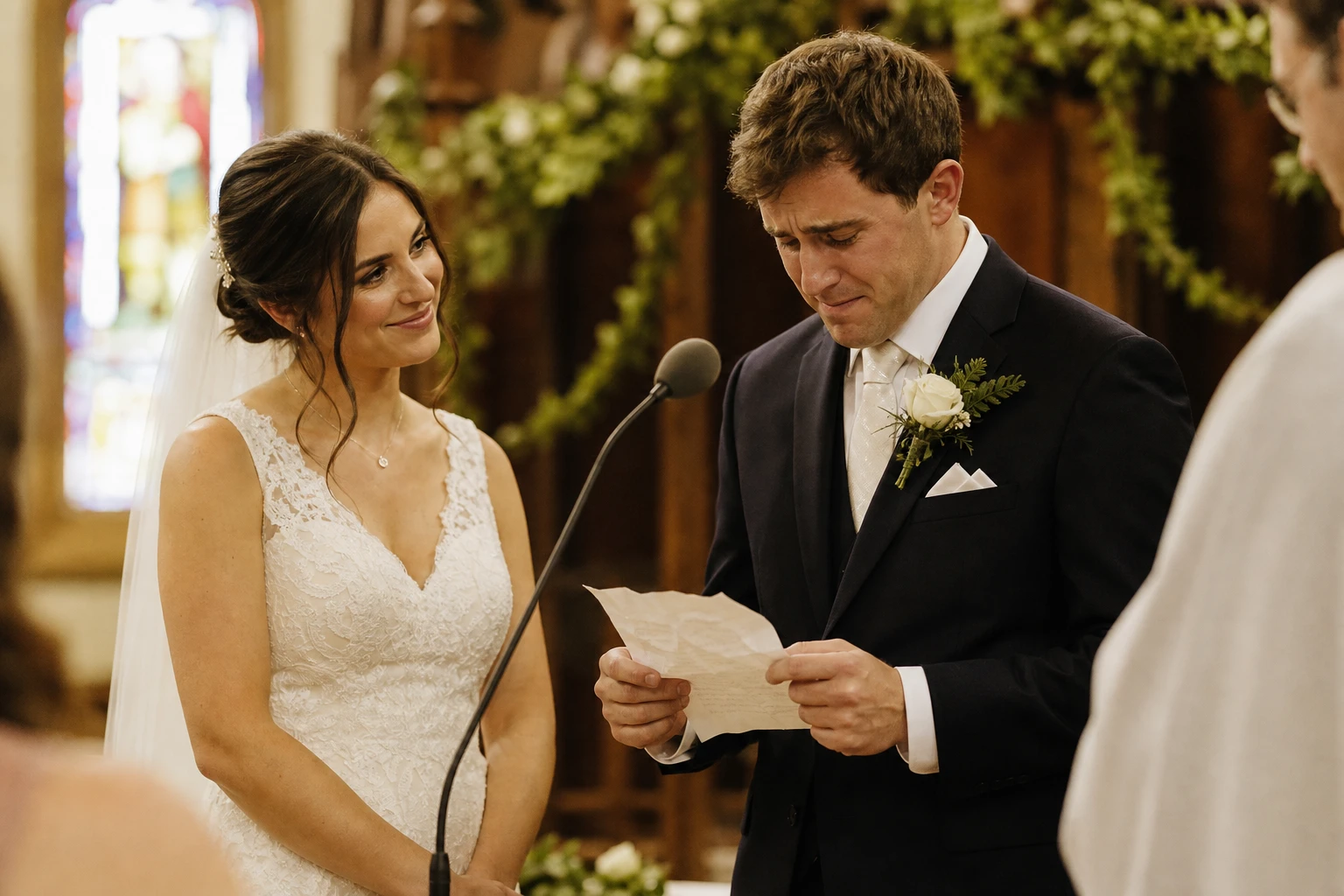
You've been to enough weddings to know when vows go wrong. The question is: how do you make sure yours don't?
Here's what nobody tells you about writing your own wedding vows: the fear isn't really about being a bad writer. It's about standing in front of everyone you love and saying something that doesn't land.
The good news is that most vow mistakes are completely preventable. They happen not because couples don't care — couples who write personal vows clearly care a great deal — but because they didn't know what to watch out for. This article collects the most common ones, drawn from the experiences of Kenyan couples who've been through it.
Mistake 1: Starting to Write the Night Before
This is the most predictable mistake, and one of the most painful. You've been so focused on the logistics — the venue, the décor, the caterer, the five hundred other things — that the vows feel like something you can dash off quickly because surely the words will come when you sit down.
They often don't. Or they come, but they're rushed and you know it, and you walk down the aisle knowing your vows aren't quite what you wanted to say.
What to do instead: Treat your vows like a vendor you need to book. Put a date in your calendar at least three weeks before the wedding: "Write first draft of vows." Then give yourself a week to live with the draft, revise it, and read it aloud until it feels natural.
The writing itself doesn't take long. The thinking does.
Mistake 2: Writing for the Audience Instead of Your Partner
This one is subtle. You start writing, and at some point you realize you're writing for the people in the seats. You want them to laugh at the right moment, to feel something, to be impressed. You start polishing for performance rather than truth.
The result is vows that sound good but don't quite land — because your partner can feel the difference between words written for them and words written for an audience.
What to do instead: Write your first draft with the imaginary rule that only your partner will ever hear it. Write as if there's no audience. The sincerity that comes from that exercise will make the vows better for everyone in the room — but it starts with writing for one person.
Mistake 3: Being Too Long
Longer does not mean more meaningful. Wedding vows are not essays. Guests are standing (or sitting in warm weather, in formal clothes, already emotional), and a set of vows that runs past three minutes starts to lose the room — even if the words are beautiful.
Two to three minutes per partner is the sweet spot. That's roughly 250-400 words read aloud at a relaxed pace. If you're going much over 500 words, you probably have two or three complete vows inside one that need editing.
What to do instead: Time yourself reading your vows out loud. If you go past three minutes, identify what you can cut. Usually it's the sections where you're listing qualities your partner has instead of saying one specific thing about one specific moment. Go deep on one thing rather than wide on many things.
Mistake 4: Too Vague to Be True
"I promise to always be there for you." "I will love you every day forever." "You make me a better person."
These are feelings, not promises. They're true, but they're not specific enough to be believed. A vow that could be said about anyone, to anyone, is not a vow — it's a greeting card.
The most moving vows are the ones where you think: only these two people could have said this. That specificity comes from concrete detail.
What to do instead: Take your vague statement and ask "How?" or "When?" until you get to something real. "I promise to always be there for you" becomes "I promise that on the nights you can't sleep, I will stay awake with you." That's a vow. That's a picture.
Mistake 5: Reading From Your Phone
We understand. You type everything on your phone. The vows are on your phone. Why print them?
Here's why: phones lock. Screens get glare in outdoor lighting. Notifications pop up. And the act of looking down at a glowing rectangle in your hand disconnects you from the moment in a way that a physical card or paper doesn't.
More importantly: a phone screen signals to guests that this is informal — like you're reading a text message, not making the most important promises of your life.
What to do instead: Print your vows on a card. Use a large, clear font (at least 14pt). Keep the card in your pocket or give it to your maid of honor to hand you at the right moment. A card also gives you something to hold onto with both hands, which helps with nerves.
Mistake 6: Matching Your Partner's Tone by Accident
You each write your vows separately — wonderful! But you don't coordinate at all, and one of you delivers something deeply emotional and searingly honest, while the other delivers something funny and light. The contrast is jarring.
Neither tone is wrong. But a ceremony that whipsaws from deeply moving to comic and back again loses its emotional coherence.
What to do instead: You don't need to read each other's vows before the day. But agree in advance on the general register: serious and heartfelt, warmly humorous, faith-centered, poetic. And agree on length. Two minutes each, or three minutes each — just decide together so neither of you is surprised.
Mistake 7: Promising Things Outside Your Control
"I promise to make you happy every day." "I promise you will never feel alone." These sound beautiful, but they're promises you can't keep — happiness is not fully in your power to give, and life will bring seasons when both of you feel lonely regardless of how much you love each other.
When those seasons come (and they will), a promise you technically broke is a harder thing to carry than you expect.
What to do instead: Promise your effort, your presence, your faithfulness — things that are within your power to give. "I promise to show up, even on the days I don't know how." That's a promise a human being can actually keep.
Mistake 8: Forgetting to Breathe
The moment arrives. You stand face to face, everyone is watching, and your voice goes tight in the first sentence. You rush through the rest because the emotion is overwhelming and you just want to get to the end.
Your guests can't follow what you're saying. Your partner barely hears it. You finish feeling like you didn't quite say the thing you meant to say.
What to do instead: Practice pausing. Literally rehearse stopping mid-sentence, taking one slow breath, and continuing. Build that pause into your muscle memory so it's available to you when the moment is real. It is okay to stop, collect yourself, and begin again. Your guests will wait. They want you to finish.
For the full guide to writing personal vows from scratch, see our article on writing personal wedding vows in Kenya. For bilingual vows in English and Swahili, see our bilingual vow templates.
Keep your vows where you can always find them
Share your love story on your Harusi Hub wedding website — a beautiful way to give your vows context before the day, and a place to keep them after.
Create Your Free Wedding Website