
Wedding Planning Tools for Multi-Event Weddings (Ruracio + Church + Reception)
Compare wedding planning tools that handle multi-event weddings — ruracio, introduction ceremony, church, and reception — as one coordinated plan.
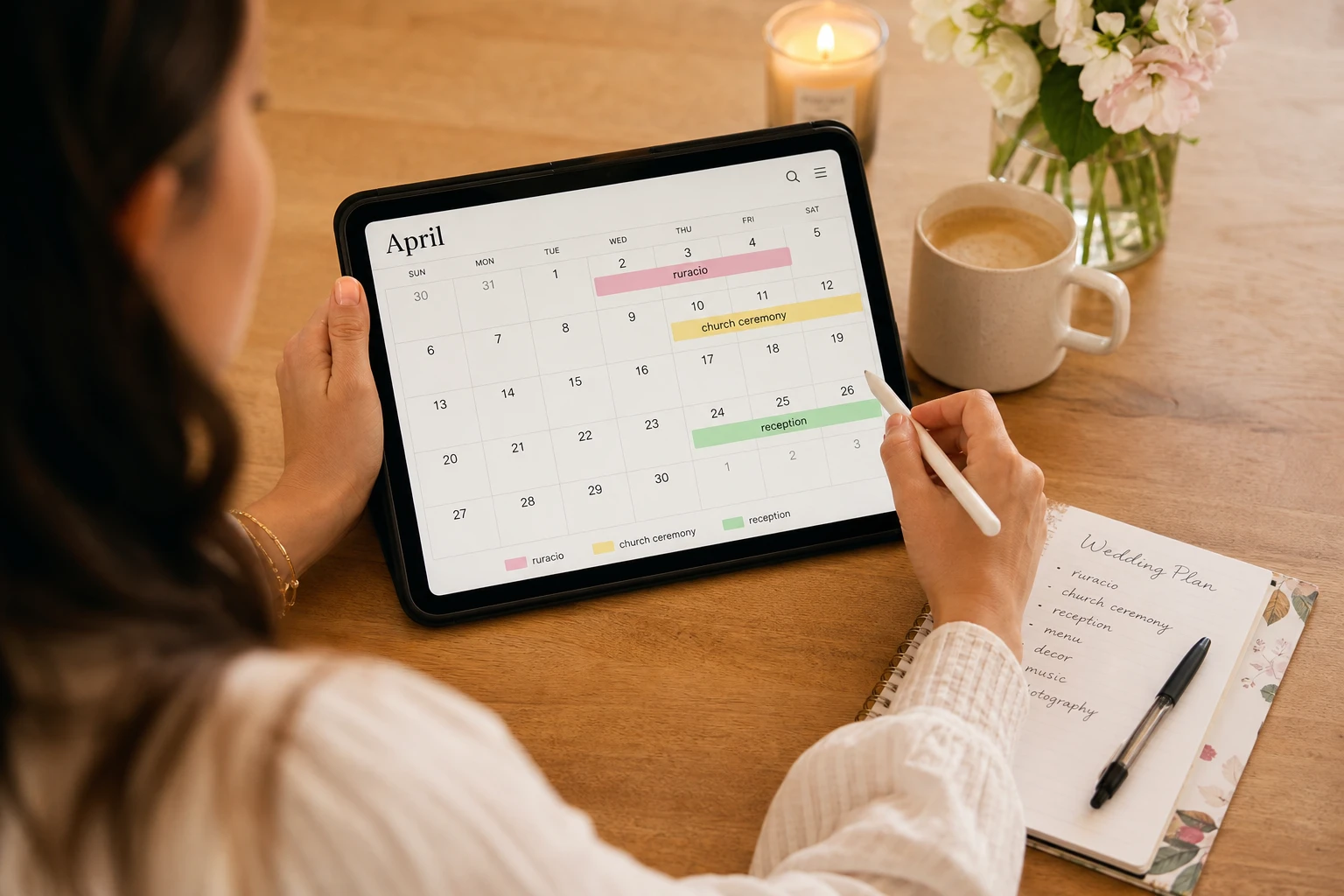
A Kenyan wedding is not one event. It is typically three to five events spread across weeks or months, each with its own guest list, vendors, budget, timeline, and logistics. The church service on Saturday has different guests than the introduction ceremony the month before. The reception has a different caterer than the ruracio. The guest count for the church may be 400; the ruracio may be 80.
Most wedding planning tools are built for a single ceremony and reception. Using them for a multi-event Kenyan wedding requires a level of workaround that ranges from slightly inconvenient to genuinely unworkable.
This article compares planning tools on their ability to handle multi-event wedding logistics as a coordinated whole, not as separate unrelated bookings.
What Multi-Event Planning Actually Requires
A planning tool that handles multi-event weddings needs to answer these questions without forcing you to create separate accounts or unrelated spreadsheets:
-
Guest lists: Which guests are invited to which events? Some guests attend all events; others attend one. The tool needs to track this without requiring duplicate records.
-
Budgets: Each event has its own budget line items. The couple needs a combined view (total wedding cost) and a per-event view (how much did the ruracio cost?).
-
Vendor management: Different vendors serve different events. The caterer for the reception may be different from the caterer for the ruracio. The DJ is only at the reception. Each vendor needs to be linked to the correct event.
-
RSVPs: Guests should be able to RSVP for specific events. A church RSVP form that includes reception details causes confusion and inaccurate headcounts.
-
Timeline and checklist: The planning timeline has milestones that belong to specific events (e.g. "confirm ruracio venue — 6 weeks before ruracio date") alongside milestones that span events (e.g. "finalise wedding MC").
-
Day-of coordination: Each event has its own run-of-show. The church programme is different from the reception programme.
Evaluation Criteria
- Multi-event guest list segmentation
- Per-event budget tracking with combined overview
- Per-event vendor assignment
- Event-specific RSVP collection
- Multi-event timeline and checklist
- Ease of managing all events from one account
- Price
Platform Breakdown
1. Harusi Hub — Multi-Event by Default
Harusi Hub is built around the premise that a Kenyan wedding has multiple events. The platform's event model is not an add-on or workaround — it is the core structure.
How it works:
- You create a wedding, then add events within it (ruracio, introduction ceremony, civil registration, church service, reception, after-party — any events you choose)
- Each event has its own guest list, RSVP form, vendor list, budget section, and timeline
- The main dashboard shows combined totals across all events: total guests, total budget, total RSVPs
- A guest can be assigned to multiple events within the same guest record — no duplicate records needed
- Budget shows per-event totals and a combined total
- The website can display event-specific information to guests (guests invited to only the church see church details; those invited to both see both)
Specific multi-event features:
- Separate RSVP pages per event (linked from the wedding website)
- Per-event headcount for catering and seating
- Vendor assignment specifies which event the vendor is booked for
- Planning checklist has both wedding-level and event-level tasks
Limitations:
- Some advanced coordination features (detailed run-of-show scheduling, minute-by-minute programme) are limited compared to professional event planning software
- Not designed for planners managing multiple client weddings simultaneously (this is a couple-facing tool)
Price: Free on the base plan.
Best for: Any Kenyan couple with two or more distinct wedding events. This is the primary recommendation.
2. Zola — Multi-Event Supported but Not Native
Zola supports multiple events on a wedding website. You can add a church ceremony page and a reception page as separate events. Guest RSVPs can specify which events they're attending.
What works:
- Multi-event website pages
- Per-event RSVP questions (attending ceremony? attending reception?)
- Guest list shows which events each guest confirmed
What doesn't work for Kenyan multi-event weddings:
- Budget tracking is not per-event — one budget total for the whole wedding
- Vendor management is not per-event
- No Kenya-specific event types in the template structure
- RSVP is email-based; phone-only guests can't use it
- No ruracio-specific planning framework or checklist tasks
Assessment: Zola handles two-event weddings (ceremony + reception) reasonably well because that's the US wedding norm. Three or more events require more manual workaround. The lack of per-event budgeting is a significant gap for Kenyan couples managing separate spending per event.
See also: Zola for Kenyan Couples — Full Review
3. Joy — Multi-Event Website, Limited Backend
Joy allows multiple events to be listed on the wedding website. The guest management has some per-event filtering.
What works:
- Multiple event sections on the website
- Event-specific RSVP questions
- Basic per-event headcount from RSVPs
What doesn't work:
- Budget is not per-event
- No per-event vendor assignment
- RSVP is email-based
- No ruracio or Kenyan cultural event context in templates or checklists
Assessment: Similar to Zola. Functional for a two-event western-style wedding, inadequate for managing a ruracio-to-reception full multi-event Kenyan wedding.
See also: Joy for Kenyan Couples — Full Review
4. The Knot — Multi-Event Website Only
The Knot allows multiple event sections on the website. Backend planning tools are not designed for per-event management.
What works:
- Multiple event information sections on the wedding website page
- RSVP for different events
What doesn't work:
- Budget is one combined total
- No per-event vendor management
- Vendor directory has no Kenya listings
- All the standard Kenya-specific limitations apply
Assessment: Functional for presenting multiple events on a website. Not useful for managing the logistics of a multi-event Kenyan wedding.
5. Google Sheets + Google Calendar (DIY)
Some couples and coordinators manage multi-event Kenyan weddings using Google Sheets for tracking and Google Calendar for scheduling. This is common among professional wedding coordinators in Kenya.
What works:
- Complete flexibility — you build the structure you need
- Per-event sheets in the same workbook
- Combined totals via formulas
- Shareable with everyone involved
- Free
What doesn't work:
- No RSVP collection
- No wedding website
- No automated reminders or status tracking
- Version control problems when multiple people edit
- Not mobile-optimised for on-the-day coordination
Assessment: Workable for a coordinator managing many weddings who knows how to build a functional spreadsheet system. Not recommended for couples planning their own wedding without a planner.
Comparison Table
| Feature | Harusi Hub | Zola | Joy | The Knot | Google Sheets |
|---|---|---|---|---|---|
| Multi-event guest segmentation | Yes | Yes | Limited | Limited | Manual |
| Per-event budget tracking | Yes | No | No | No | Manual |
| Per-event vendor assignment | Yes | No | No | No | Manual |
| Event-specific RSVP | Yes | Yes | Yes | Yes | No |
| Combined overview dashboard | Yes | Partial | Partial | Partial | Manual |
| Multi-event checklist | Yes | No | No | No | Manual |
| Phone RSVP for all events | Yes | No | No | No | N/A |
| Kenya-specific event types | Yes | No | No | No | Manual |
| Free | Yes | Yes | Yes | Yes | Yes |
Final Recommendation
For multi-event Kenyan weddings, the gap between Harusi Hub and every other platform is the widest of any category in this comparison series.
Harusi Hub is built on the premise that a Kenyan wedding has multiple events. Every other platform treats multi-event as an extension of a one-ceremony-one-reception structure that doesn't fit the Kenyan context.
If you are planning a ruracio, an introduction ceremony, a church service, and a reception — potentially across different dates, different venues, and with partially overlapping guest lists — Harusi Hub is the only platform where you can manage all of that coherently from one account without building your own spreadsheet infrastructure on the side.
Manage your multi-event wedding with Harusi Hub →
Related reading: